Honda · Pilot · 2012
2012 Honda Pilot
9
Recalls
170
Complaints
4/5
Safety Rating
The 2012 Honda Pilot has 9 recalls and 170 owner-reported complaints on file with NHTSA. Overall safety rating: 4 out of 5 stars. Most reported issue: air bags (17 reports).
Source: NHTSA Public Records · Updated Apr 28, 2026
Research Context
The 2012 Honda Pilot page works best as a research starting point. Complaint totals show how much owner-reported activity exists, while recalls and investigations help show whether any of that activity turned into formal safety action.
Because this is a newer-era vehicle page, it usually helps to compare this year against nearby model years before deciding whether a complaint pattern looks isolated or persistent. On this page, the most prominent complaint area is air bags with 17 reported complaints.
Best Research Moves
- Use the complaint log to understand what owners were actually reporting instead of relying only on the raw complaint total.
- Compare the recall list with the complaint mix to see whether the most reported issues overlap with formal NHTSA safety campaigns.
- This page is primarily a complaints-and-recalls research surface, so compare nearby model years before treating the complaint total as a standalone verdict.
Key Takeaways
- The 2012 Honda Pilot currently shows 9 NHTSA recalls listed on this page and 170 owner-reported complaints.
- This page currently shows no linked NHTSA investigations.
- This page reflects complaint volume, recall history, and NHTSA test data, but it does not diagnose causes or rank reliability by itself.
- Safety data currently shows 4/5 overall NHTSA safety rating.
- The most frequently reported complaint categories on this page are air bags (17), engine (15), service brakes (14).
- Vehicle
- 2012 Honda Pilot
- Recalls
- 9
- Complaints
- 170
- Safety Rating
- 4/5
How to Interpret This Page
This page combines three types of NHTSA data: recall campaigns (official manufacturer or government actions), owner complaints (unverified consumer reports), and crash test ratings (where available). A vehicle with many complaints is not necessarily less reliable — complaint volume correlates with sales volume and vehicle age. Recalls indicate identified defects, not overall quality. To compare this model year with others, use the year navigation in the sidebar or return to the model overview page.
If you are researching a used vehicle, start with the complaint categories, compare them against the recall list, and then check nearby model years to see whether the same issue profile repeats. That usually produces a better buying or research signal than treating the raw complaint total as a standalone safety ranking.
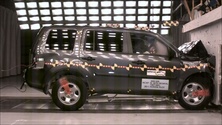
NHTSA Crash Test Performance
Frontal Crash Test
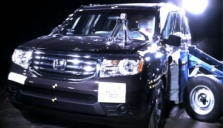
Side Crash Test
Overall Frontal Rating
Driver and Passenger Assessment
Driver Side
Passenger Side
Overall Side Rating
Side Barrier and Side Pole Tests
Driver Side
Passenger Side
Rollover Resistance
17.4% rollover risk in single-vehicle crash
Safety Features
ESC: StandardForward Collision Warning: NoLane Departure Warning: No
Recall Notices
NHTSANHTSA ID: 19V502000June 27, 2019
AIR BAGS:FRONTAL:PASSENGER SIDE:INFLATOR MODULE
Honda (American Honda Motor Co.) is recalling certain 2009-2014 Acura TSX, 2011-2014 TSX Sport Wagon, 2010-2013 ZDX, 2008-2012 Honda Accord, 2010-2011 Accord Crosstour, 2006-2011 Civic and Civic Hybrid, 2008-2010 Civic GX NGV, 2012-2015 Crosstour, 2007-2011 CR-V, 2009-2013 Fit, 2014 Fit EV, 2010-2014 Insight, and 2009-2015 Pilot vehicles. The vehicles are equipped with passenger frontal air bag inflators assembled as a recall remedy part or replacement service part, that may explode due to propellant degradation occurring after long-term exposure to high absolute humidity, temperature and temperature cycling.
Remedy Status
Honda will notify owners, and dealers will replace the passenger frontal air bag inflator, free of charge. The recall began August 12, 2019. Owners may contact Honda customer service at 1-888-234-2138. Honda's numbers for this recall are F5F and Q5E.
NHTSA ID: 19V378000May 16, 2019
AIR BAGS:FRONTAL:PASSENGER SIDE:INFLATOR MODULE
Honda (American Honda Motor Co.) is recalling certain 2009-2014 Acura TSX, 2011-2013 TSX Sport Wagon, and 2010-2012 ZDX and 2008-2012 Honda Accord, 2010-2011 Accord Crosstour, 2006-2011 Civic, Civic Hybrid and Civic NGV, 2012-2014 Crosstour, 2007-2011 CR-V, 2009-2013 Fit, 2010-2013 Insight, and 2009-2015 Pilot vehicles. The front passenger air bag inflator may have been installed incorrectly during replacement.
Remedy Status
Honda will notify owners, and dealers will inspect the inflator installation and, if necessary, replace the passenger frontal air bag module assembly, free of charge. The recall began July 5, 2019. Owners may contact Honda customer service at 1-888-234-2138. Honda's numbers for this recall are M4O, P4R, T4Q, and W4P.
NHTSA ID: 18V661000September 27, 2018
AIR BAGS:FRONTAL:PASSENGER SIDE:INFLATOR MODULE
Honda (American Honda Motor Co.) is recalling certain 2014 Honda Insight and Acura TSX and TSX Wagon, 2014-2015 Honda Crosstour and Pilot vehicles nationwide, as well as certain 2014 Honda FCX Clarity and Fit EV vehicles in Florida, Hawaii, Puerto Rico, Texas, Alabama, Georgia, Louisiana, Mississippi, South Carolina, California, American Samoa, Guam, the Northern Mariana Islands (Saipan) and the U.S. Virgin Islands. Honda is also recalling certain 2011-2013 Acura TSX, TSX Wagon and ZDX, Honda Crosstour, Insight, Fit and Pilot vehicles, 2011-2012 Honda Accord and 2011 Honda Civic NGV, Civic, Civic Hybrid and CR-V vehicles in Arizona, Arkansas, Delaware, the District of Columbia, Illinois, Indiana, Kansas, Kentucky, Maryland, Missouri, Nebraska, Nevada, New Jersey, New Mexico, North Carolina, Ohio, Oklahoma, Pennsylvania, Tennessee, Virginia and West Virginia. Lastly, Honda is recalling certain 2010-2013 Acura TSX and ZDX, Honda Crosstour, Fit, Insight and Pilot, 2011-2013 TSX Wagon, 2010-2012 Honda Accord and 2010-2011 Honda Civic NGV, Civic, Civic Hybrid and CR-V vehicles in Alaska, Colorado, Connecticut, Idaho, Iowa, Maine, Massachusetts, Michigan, Minnesota, Montana, New Hampshire, New York, North Dakota, Oregon, Rhode Island, South Dakota, Utah, Vermont, Washington, Wisconsin and Wyoming. These vehicles are equipped with certain air bag air bag inflators assembled as part of the frontal air bag modules, and used as original equipment or replacement equipment (such as after a vehicle crash necessitating replacement of the original air bags), may explode due to propellant degradation occurring after long-term exposure to higher absolute humidity, temperature and temperature cycling.
Remedy Status
Honda will notify owners, and dealers will replace the passenger frontal air bag inflator, free of charge. The recall began November 6, 2018. Owners may contact Honda customer service at 1-888-234-2138. Honda's numbers for this recall are M2J and S2K.
NHTSA ID: 18V268000April 26, 2018
AIR BAGS:FRONTAL:PASSENGER SIDE:INFLATOR MODULE
Honda (American Honda Motor Co.) is recalling certain 2003-2012 Honda Accord and Pilot, 2010 Accord Crosstour, 2001-2011 Civic, 2002-2011 CR-V, 2003-2004, 2006-2008 and 2011 Element, 2007 and 2009-2013 Fit, 2010-2012 Insight, 2002-2004 Odyssey, and 2012 Ridgeline vehicles. The front passenger air bag may have been installed incorrectly during replacement.
Remedy Status
Honda will notify owners, and dealers will inspect and, if necessary, replace the passenger frontal air bag module assembly, free of charge. The recall began June 22, 2018. Owners may contact Honda customer service at 1-888-234-2138. Honda's numbers for this recall are K1P, and M1O.
NHTSA ID: 18V042000January 09, 2018
AIR BAGS:FRONTAL:PASSENGER SIDE:INFLATOR MODULE
Honda (American Honda Motor Co.) is recalling certain 2010-2013 Acura TSX, ZDX, Honda Accord Crosstour, Fit, Insight and Pilot vehicles, 2011-13 Acura TSX Sportswagon, 2010-2012 Honda Accord,, 2010-2011 Honda Civic, Civic NGV, Civic Hybrid and CR-V vehicles and 2013 Honda FCX Clarity and Fit EV vehicles ever registered in the states of Alabama, California, Florida, Georgia, Hawaii, Louisiana, Mississippi, South Carolina, Texas, Puerto Rico, American Samoa, Guam, the Northern Mariana Islands (Saipan), and the U.S. Virgin Islands or "Zone A." Additionally, Honda is recalling certain 2010-2012 Acura TSX, Honda Accord, Accord Crosstour, Fit and Pilot, 2010-2011 Honda Civic, Civic NGV, Civic Hybrid and CR-V, and 2010 Acura ZDX and Honda Insight vehicles ever registered in the states of Arizona, Arkansas, Delaware, District of Columbia, Illinois, Indiana, Kansas, Kentucky, Maryland, Missouri, Nebraska, Nevada, New Jersey, New Mexico, North Carolina, Ohio, Oklahoma, Pennsylvania, Tennessee, Virginia, and West Virginia or "Zone B." Unless included in Zones A or B above, Honda is recalling certain 2009 Acura TSX, Honda Accord, Civic, Civic NGV, Civic Hybrid, CR-V, Fit, and Pilot vehicles ever registered in the states of Alaska, Colorado, Connecticut, Idaho, Iowa, Maine, Massachusetts, Michigan, Minnesota, Montana, New Hampshire, New York, North Dakota, Oregon, Rhode Island, South Dakota, Utah, Vermont, Washington, Wisconsin, and Wyoming or "Zone C." These vehicles are equipped with certain air bag inflators assembled as part of the frontal air bag modules, and used as original equipment or replacement equipment (such as after a vehicle crash necessitating replacement of the original air bags), may explode due to propellant degradation occurring after long-term exposure to higher absolute humidity, temperature and temperature cycling.
Remedy Status
Honda will notify owners, and dealers will replace the passenger frontal air bag inflator, free of charge. The recall began February 16, 2018. Owners may contact Honda customer service at 1-888-234-2138. Honda's numbers for this recall are B0K and L0J.
NHTSA ID: 17V545000August 31, 2017
AIR BAGS:FRONTAL:PASSENGER SIDE:INFLATOR MODULE
Honda (American Honda Motor Co.) is recalling certain 2008-2012 Accord, 2010-2012 Accord Crosstour, 2006-2011 Civic, 2007-2011 CR-V, 2009-2012 Fit and Pilot, 2010-2012 Insight, and 2009-2012 Acura TSX vehicles that received replacement passenger frontal air bag inflators. One dealership may have incorrectly installed the replacement air bag inflators.
Remedy Status
Honda will notify owners, and dealers will replace the passenger frontal air bag module assembly, free of charge. The recall began October 30, 2017. Owners may contact Honda customer service at 1-888-234-2138. Honda's numbers for this recall are O07, Y0A, N06, G05, M04, Y01, and O09.
NHTSA ID: 17V030000January 10, 2017
AIR BAGS:FRONTAL:PASSENGER SIDE:INFLATOR MODULE
Honda (American Honda Motor Co.) is recalling certain 2009-2012 Acura TSX, 2011-2012 Acura TSX Wagon, 2010-2012 Acura ZDX, 2008-2012 Honda Accord, 2010-2012 Honda Accord Crosstour and Honda Insight, 2009-2012 Honda Fit, 2009-2012 Pilot, 2007-2011 Honda CR-V, 2012 Honda FCX Clarity and 2006-2011 Honda Civic, Civic Hybrid, Civic NGV vehicles originally sold, or ever registered, in Alabama, California, Florida, Georgia, Hawaii, Louisiana, Mississippi, South Carolina, Texas, Puerto Rico, American Samoa, Guam, the Northern Mariana Islands (Saipan), and the U.S. Virgin Islands, or "Zone A." Additionally, if not included in "Zone A" above, Honda is recalling certain 2009 Acura TSX, Honda Fit and Pilot, 2008-2009 Honda Accord, 2006-2009 Civic, Civic Hybrid and Civic NGV, and 2007-2009 Honda CR-V vehicles originally sold, or ever registered, in Arizona, Arkansas, Delaware, District of Columbia, Illinois, Indiana, Kansas, Kentucky, Maryland, Missouri, Nebraska, Nevada, New Jersey, New Mexico, North Carolina, Ohio, Oklahoma, Pennsylvania, Tennessee, Virginia, and West Virginia, or "Zone B." Additionally, if not included in "Zone B" above, Honda is recalling certain 2008 Honda Accord, 2006-2008 Honda Civic, Civic Hybrid and Civic NGV and 2007-2008 Honda CR-V vehicles originally sold, or ever registered, in Alaska, Colorado, Connecticut, Idaho, Iowa, Maine, Massachusetts, Michigan, Minnesota, Montana, New Hampshire, New York, North Dakota, Oregon, Rhode Island, South Dakota, Utah, Vermont, Washington, Wisconsin, and Wyoming. These vehicles are equipped with certain air bag inflators assembled as part of the passenger frontal air bag modules used as original equipment or replacement equipment. In the event of a crash necessitating deployment of the front air bags, these inflators may rupture due to propellant degradation occurring after long-term exposure to absolute humidity and temperature cycling.
Remedy Status
Honda will notify owners, and dealers will replace the front passenger side air bag inflator, free of charge. The manufacturer has mailed an interim notification, and will send a second notification when parts are available. Owners may contact Honda customer service at 1-888-234-2138. Honda's numbers for this recall are KE1 and KE2.
NHTSA ID: 13V016000January 18, 2013
AIR BAGS
Honda is recalling certain model year 2009-2013 Pilot and 2011-2013 Odyssey passenger vehicles manufactured from March 13, 2008, through December 21, 2012. One or more rivets that attach the airbag module to the airbag cover may be missing.
Remedy Status
Honda will notify owners and instruct them to take their vehicle to a Honda dealer. The dealer will inspect the driver's airbag module and replace it if necessary, free of charge. The recall began on March 14, 2013. Owners may contact Honda at 1-800-999-1009.
NHTSA ID: 12V063000February 17, 2012
FUEL SYSTEM, GASOLINE:STORAGE:TANK ASSEMBLY
HONDA IS RECALLING CERTAIN MODEL YEAR 2012 PILOT AND ACURA MDX VEHICLES. THE VENT SHUT FLOAT (VSF) VALVE CASE IN THE FUEL TANK ASSEMBLY DOES NOT MEET THE DESIGN SPECIFICATIONS.
Remedy Status
HONDA WILL NOTIFY OWNERS AND DEALERS WILL INSPECT THE VSF ASSEMBLY DATE AND, IF NECESSARY, REPLACE THE FUEL TANK ASSEMBLY, FREE OF CHARGE. THE SAFETY RECALL BEGAN ON MARCH 13, 2012. OWNERS MAY CONTACT HONDA CUSTOMER SERVICE AT 1-800-999-1009.
Owner Complaints
170 totalELECTRICAL SYSTEM,ENGINE,FUEL/PROPULSION SYSTEM
FIREApr 9, 2026
On April 9, 2026, my daughter came in from school and parked her Honda Pilot at about 5:10PM. At about 7:03PM, my wife and I were sitting outside and heard a loud POP, it sounded like a car backfiring. I went to investigate and saw a little smoke and a small orange glowing piece ...
Preview excerpt
AIR BAGS
Feb 24, 2026
One day my pilot 2012 suddenly started turning on and off the passenger airbag then out of the blue the airbag system light when on. Scanned it an it reads the passenger weight sensor is not communicating the part is no longer available to purchase and it is in backorder with dat...
Preview excerpt
ELECTRICAL SYSTEM
Jan 2, 2026
Odometer Fraud. The contact purchased a 2012 Honda Pilot. The contact then discovered a mileage discrepancy. The vehicle was a private sale. At the time of purchase, the vehicle mileage was 67,450. The contact stated that at the time of retrieving a Carfax report, it was discover...
Preview excerpt
ELECTRICAL SYSTEM
Nov 24, 2025
Odometer Fraud. The contact purchased a 2012 Honda Pilot. After contacting the seller on Facebook Market Place the contact purchased the vehicle and later discovered that there was a mileage discrepancy. The vehicle was a private sale. At the time of purchase, the odometer mileag...
Preview excerpt
POWER TRAIN,ENGINE
Aug 15, 2025
The check transmission light comes and goes. Ive had the transmission flushed with no issues. It pulls codes for the torque converter as its supposedly getting stuck per mechanic or is over heating and throwing the code. It does not drive rough and I believe it is a faulty code t...
Preview excerpt
ELECTRICAL SYSTEM
Apr 17, 2025
Odometer Fraud. The contact has never owned or purchased these vehicles. The vehicles never purchased in any type of sale. The contact stated that the state of New York has asked for additional paper for the vehicle's registration. The vehicle was not a private sale or dealer sal...
Preview excerpt
ELECTRICAL SYSTEM
Apr 9, 2025
Odometer Fraud. The contact purchased a 2012 Honda Pilot. The contact stated that while attempting to register the vehicle, it was discovered that there was a mileage discrepancy. The vehicle was a private sale. At the time of purchase, the vehicle mileage was 112,000, and at the...
Preview excerpt
ELECTRICAL SYSTEM
Dec 22, 2024
Check engine light came on followed by shaking of the vehicle. The code was checked indicating a cylinder 1 misfire. This has been an ongoing issue of cylinders misfiring. The spark plugs and coils have been replaced multiple times and the issue is still persisting.
POWER TRAIN,ELECTRICAL SYSTEM
Dec 24, 2023
While driving the vehicle at around 45 MPH it suffered a complete loss of power for 3-5 seconds. The dashboard lights illuminated and then the vehicle restarted without having to restart via the ignition and all of the dash lights turned off. This has happened intermittently on t...
Preview excerpt
ELECTRICAL SYSTEM,ENGINE AND ENGINE COOLING
Dec 4, 2023
See attached document for complaint
Showing 10 recent complaints from 170 total
View Full Complaint LogCompare Related Vehicles
Why Compare These Pages
The strongest comparison flow is usually: exact vehicle-year page, then nearby years of the same model, then other 2012 Honda models. That sequence helps separate one-off year spikes from broader make-wide patterns.
More Honda Pilot Years
2013 Honda PilotCompare this year against 2012 for complaint and recall shifts.6r265c2011 Honda PilotCompare this year against 2012 for complaint and recall shifts.11r290c2014 Honda PilotCompare this year against 2012 for complaint and recall shifts.3r114c2010 Honda PilotCompare this year against 2012 for complaint and recall shifts.10r111c2015 Honda PilotCompare this year against 2012 for complaint and recall shifts.4r1i105c2009 Honda PilotCompare this year against 2012 for complaint and recall shifts.9r134c
More 2012 Honda Models
2012 Honda CivicAnother 2012 Honda option for same-year comparison.3r2i452c2012 Honda CR-VAnother 2012 Honda option for same-year comparison.3r3i393c2012 Honda AccordAnother 2012 Honda option for same-year comparison.8r1i377c2012 Honda OdysseyAnother 2012 Honda option for same-year comparison.5r238c2012 Honda FitAnother 2012 Honda option for same-year comparison.11r1i113c2012 Honda InsightAnother 2012 Honda option for same-year comparison.8r1i59c
Frequently Asked Questions
How many recalls does the 2012 Honda Pilot have?
The 2012 Honda Pilot has 9 recalls recorded by NHTSA.
How many complaints have been filed for the 2012 Honda Pilot?
NHTSA has received 170 owner-reported complaints for the 2012 Honda Pilot.
What is the NHTSA safety rating for the 2012 Honda Pilot?
The 2012 Honda Pilot received an overall safety rating of 4 out of 5 stars from NHTSA.
What are the most common problems with the 2012 Honda Pilot?
The most commonly reported complaint categories for the 2012 Honda Pilot are air bags (17 reports), engine (15 reports), service brakes (14 reports).
Does the 2012 Honda Pilot have any recalls?
Yes. NHTSA has 9 recalls on record for the 2012 Honda Pilot. Scroll up to review the published recall summaries, consequences, and remedies. To check for unrepaired recalls on your specific vehicle, use your VIN at nhtsa.gov/recalls.
Check Another Vehicle
Look up recalls and complaints for any year, make, and model.
This page summarizes publicly available data from the National Highway Traffic Safety Administration (NHTSA). Complaint counts reflect reports submitted to NHTSA by vehicle owners and do not by themselves prove defect severity or vehicle safety. Safety ratings may not be available for all vehicle-years. This site is not affiliated with NHTSA or any vehicle manufacturer. For official information, visit the official NHTSA page for this vehicle.