Acura · TLX · 2017
2017 Acura TLX
3
Recalls
63
Complaints
5/5
Safety Rating
The 2017 Acura TLX has 3 recalls and 63 owner-reported complaints on file with NHTSA. Overall safety rating: 5 out of 5 stars. Most reported issue: engine (9 reports).
Source: NHTSA Public Records · Updated Apr 28, 2026
Research Context
The 2017 Acura TLX page works best as a research starting point. Complaint totals show how much owner-reported activity exists, while recalls and investigations help show whether any of that activity turned into formal safety action.
Because this is a newer-era vehicle page, it usually helps to compare this year against nearby model years before deciding whether a complaint pattern looks isolated or persistent. On this page, the most prominent complaint area is engine with 9 reported complaints.
Best Research Moves
- Use the complaint log to understand what owners were actually reporting instead of relying only on the raw complaint total.
- Review the recall section even if the total is smaller, because a limited number of recalls can still point to meaningful safety actions.
- This page is primarily a complaints-and-recalls research surface, so compare nearby model years before treating the complaint total as a standalone verdict.
Key Takeaways
- The 2017 Acura TLX currently shows 3 NHTSA recalls listed on this page and 63 owner-reported complaints.
- This page currently shows no linked NHTSA investigations.
- This page reflects complaint volume, recall history, and NHTSA test data, but it does not diagnose causes or rank reliability by itself.
- Safety data currently shows 5/5 overall NHTSA safety rating.
- The most frequently reported complaint categories on this page are engine (9), engine and engine cooling (9), power train (7).
- Vehicle
- 2017 Acura TLX
- Recalls
- 3
- Complaints
- 63
- Safety Rating
- 5/5
How to Interpret This Page
This page combines three types of NHTSA data: recall campaigns (official manufacturer or government actions), owner complaints (unverified consumer reports), and crash test ratings (where available). A vehicle with many complaints is not necessarily less reliable — complaint volume correlates with sales volume and vehicle age. Recalls indicate identified defects, not overall quality. To compare this model year with others, use the year navigation in the sidebar or return to the model overview page.
If you are researching a used vehicle, start with the complaint categories, compare them against the recall list, and then check nearby model years to see whether the same issue profile repeats. That usually produces a better buying or research signal than treating the raw complaint total as a standalone safety ranking.
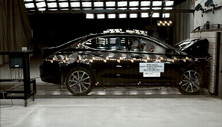
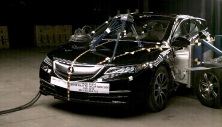
NHTSA Crash Test Performance
Frontal Crash Test
Side Crash Test
Overall Frontal Rating
Driver and Passenger Assessment
Driver Side
Passenger Side
Overall Side Rating
Side Barrier and Side Pole Tests
Driver Side
Passenger Side
Rollover Resistance
9.8% rollover risk in single-vehicle crash
Safety Features
ESC: StandardForward Collision Warning: OptionalLane Departure Warning: Optional
Recall Notices
NHTSANHTSA ID: 23V858000December 18, 2023
FUEL SYSTEM, GASOLINE:DELIVERY:FUEL PUMP
Honda (American Honda Motor Co.) is recalling certain 2013-2023 Honda Accord, Civic Coupe, Civic Sedan, Civic Hatchback, Civic Type R, CR-V, HR-V, Ridgeline, Odyssey, Acura ILX, MDX, MDX Hybrid, RDX, RLX, TLX, 2019-2022 Honda Insight, Passport, 2020 Honda CR-V Hybrid, 2018-2019 Honda Clarity PHEV, Fit, and 2015-2020 Honda Accord Hybrid, Pilot, Acura NSX vehicles. The fuel pump inside the fuel tank may fail.
Remedy Status
Dealers will replace the fuel pump module, free of charge. Owner letters were mailed September 6, 2024. Owners may contact Honda customer service at 1-888-234-2138. Honda's numbers for this recall are KGC and KGD. This recall is an expansion of NHTSA recall numbers 21V-215 and 20V-314.
NHTSA ID: 23V751000November 13, 2023
ENGINE AND ENGINE COOLING:ENGINE:HARD PARTS INTERNAL/MECHANICAL
Honda (American Honda Motor Co.) is recalling certain 2015-2020 Acura TLX, 2016-2020 Acura MDX, 2016 and 2018-2019 Pilot, 2017 and 2019 Ridgeline, and 2018-2019 Odyssey vehicles. Due to a manufacturing error, the connecting rod bearing in the engine may wear and seize, damaging the engine.
Remedy Status
Dealers will inspect and repair, or replace the engine as necessary, free of charge. Owner letters were mailed March 28, 2024. 2016-2017 Acura MDX owner letters were mailed November 1, 2024. 2016-2020 Acura MDX owner letters are expected to be mailed in mid-December 2024. Honda began mailing owner notification letters as of March 18, 2024. 2015-2016 Acura owner letters are expected to be mailed mid-December 2024, 2018 Acura TLX owner letters are expected to be mailed the end of March/early April 2024, 2019 Acura TLX owner letters are expected to be mailed mid-May 2024, 2020 Acura TLX owner letters are expected to be mailed mid-June 2024, and 2016-2020 Acura MDX owner letters are expected to be mailed January 27, 2025. Owners may contact Honda customer service at 1-888-234-2138. Honda's numbers for these recalls are XG1 and GG0.
NHTSA ID: 19V060000January 29, 2019
FUEL SYSTEM, OTHER:DELIVERY:FUEL PUMP
Honda (American Honda Motor Co.) is recalling certain 2016-2018 Acura MDX, 2015-2019 Acura TLX and 2015-2017 Honda Accord vehicles, equipped with a 3.5L V6 engine. Particulates in fuel may adhere to the internal components of the fuel pump, reducing its performance.
Remedy Status
Honda will notify owners, and dealers will update the fuel injection engine control unit (FI-ECU) software and, if necessary, replace the fuel pump, free of charge. The recall began March 25, 2019. Owners may contact customer service at 1-888-234-2138. Acura's recall number for this recall is P3W. Honda's recall number for this recall is N3X.
Owner Complaints
63 totalFUEL/PROPULSION SYSTEM
Apr 9, 2026
I was refueling my vehicle at Fullerton Costco, the internal metal flap of the capless fuel filler neck is stuck closed and preventing me from inserting a gas nozzle to refuel the vehicle. I could not refuel my gas tank. Luckily, my vehicle still has some fuel left, enough for me...
Preview excerpt
ENGINE AND ENGINE COOLING
Apr 2, 2026
The contact owns a 2017 Acura TLX. The contact stated the vehicle was repaired under NHTSA Campaign Number: 23V751000 (ENGINE AND ENGINE COOLING) but the fix failed to repair the vehicle. The contact stated that after the repair was performed, there was an abnormal fuel odor comi...
Preview excerpt
UNKNOWN OR OTHER,SERVICE BRAKES,ENGINE
CRASH1 injuryFeb 24, 2026
My 2017 Acura was involved in a low-speed collision where it failed to stop in a timely manner, resulting in a total loss declaration. This vehicle had open safety recalls (including the fuel pump/rod bearing issues) that remained unrepaired for over 1.5 years. Despite multiple i...
Preview excerpt
UNKNOWN OR OTHER
Sep 29, 2025
My car shuts off at idle without warning. No lights or codes. I’ve seen a fuel pump issue is the cause on other models like mine.
ENGINE
Aug 25, 2025
Hello i am writing in to see why the Acura TLX recall range is 2018-2020. The original effected engines for the TLX were 2015-2020 Acura TLX 3.5 v6. The engines for the 15-17 are the same as a 18-20 Acura TLX
ENGINE
Apr 28, 2025
I was driving on the freeway and I heard something explode followed by a clanking noise. The oil light and battery light came on simultaneously and I could not accelerate. I immediately pulled over and noticed that all the oil drained out of the car. When I got a chance look unde...
Preview excerpt
ELECTRICAL SYSTEM
Jan 16, 2025
Electronic parking brake and check emissions system lights going on simultaneously. Car stalled on freeway and check transmission light also went on simultaneously. Very dangerous. Multiple reports submitted for similar issue by many people. Please look into this. Acura needs a r...
Preview excerpt
ENGINE,FUEL/PROPULSION SYSTEM
Nov 22, 2024
My daughter was driving her car to work. Well in the middle of rush hour traffic the car put itself in neutral and then would not move and all of the lights were displayed on the dashboard as if the car was turned off. The car would not go into gear to move forward. She put the c...
Preview excerpt
FUEL/PROPULSION SYSTEM
Oct 1, 2024
On September 30, 2024 I received a notice from Acura titled “Important Safety Notice” (Recall Number 23V-751). The recall concerns a manufacturing defect of the engine crankshaft. On October 1, 2024 I contacted Nalley Acura of Marietta, Georgia about scheduling an appointment a...
Preview excerpt
ENGINE AND ENGINE COOLING
Sep 30, 2024
The contact owns a 2017 Acura TLX. The contact stated that the vehicle was previously repaired under NHTSA Campaign Number: 23V751000 (Engine and Engine Cooling); however, the failure occurred five months after the recall repair. The contact stated that while driving at an undisc...
Preview excerpt
Showing 10 recent complaints from 63 total
View Full Complaint LogCompare Related Vehicles
Why Compare These Pages
The strongest comparison flow is usually: exact vehicle-year page, then nearby years of the same model, then other 2017 Acura models. That sequence helps separate one-off year spikes from broader make-wide patterns.
More Acura TLX Years
2018 Acura TLXCompare this year against 2017 for complaint and recall shifts.3r91c2016 Acura TLXCompare this year against 2017 for complaint and recall shifts.3r106c2019 Acura TLXCompare this year against 2017 for complaint and recall shifts.5r87c2015 Acura TLXCompare this year against 2017 for complaint and recall shifts.6r337c2020 Acura TLXCompare this year against 2017 for complaint and recall shifts.4r60c2021 Acura TLXCompare this year against 2017 for complaint and recall shifts.3r54c
More 2017 Acura Models
2017 Acura MDXAnother 2017 Acura option for same-year comparison.6r229c2017 Acura RDXAnother 2017 Acura option for same-year comparison.1r71c2017 Acura ILXAnother 2017 Acura option for same-year comparison.4r20c2017 Acura NSXAnother 2017 Acura option for same-year comparison.3r6c2017 Acura RLXAnother 2017 Acura option for same-year comparison.2c
Frequently Asked Questions
How many recalls does the 2017 Acura TLX have?
The 2017 Acura TLX has 3 recalls recorded by NHTSA.
How many complaints have been filed for the 2017 Acura TLX?
NHTSA has received 63 owner-reported complaints for the 2017 Acura TLX.
What is the NHTSA safety rating for the 2017 Acura TLX?
The 2017 Acura TLX received an overall safety rating of 5 out of 5 stars from NHTSA.
What are the most common problems with the 2017 Acura TLX?
The most commonly reported complaint categories for the 2017 Acura TLX are engine (9 reports), engine and engine cooling (9 reports), power train (7 reports).
Does the 2017 Acura TLX have any recalls?
Yes. NHTSA has 3 recalls on record for the 2017 Acura TLX. Scroll up to review the published recall summaries, consequences, and remedies. To check for unrepaired recalls on your specific vehicle, use your VIN at nhtsa.gov/recalls.
Check Another Vehicle
Look up recalls and complaints for any year, make, and model.
This page summarizes publicly available data from the National Highway Traffic Safety Administration (NHTSA). Complaint counts reflect reports submitted to NHTSA by vehicle owners and do not by themselves prove defect severity or vehicle safety. Safety ratings may not be available for all vehicle-years. This site is not affiliated with NHTSA or any vehicle manufacturer. For official information, visit the official NHTSA page for this vehicle.