Ford · Explorer · 2013
2013 Ford Explorer
12
Recalls
2,209
Complaints
5/5
Safety Rating
The 2013 Ford Explorer has 12 recalls and 2,209 owner-reported complaints on file with NHTSA. Overall safety rating: 5 out of 5 stars. Most reported issue: steering (680 reports).
Source: NHTSA Public Records · Updated May 4, 2026
Research Context
The 2013 Ford Explorer page works best as a research starting point. Complaint totals show how much owner-reported activity exists, while recalls and investigations help show whether any of that activity turned into formal safety action.
Because this is a newer-era vehicle page, it usually helps to compare this year against nearby model years before deciding whether a complaint pattern looks isolated or persistent. On this page, the most prominent complaint area is steering with 680 reported complaints.
Best Research Moves
- Use the complaint log to see whether the 2013 Ford Explorer reports cluster around one repeated symptom or spread across multiple systems.
- Compare the recall list with the complaint mix to see whether the most reported issues overlap with formal NHTSA safety campaigns.
- Check the linked investigations for extra ODI context if you want to see whether owner complaints escalated into formal defect review.
Key Takeaways
- The 2013 Ford Explorer currently shows 12 NHTSA recalls listed on this page and 2,209 owner-reported complaints.
- This page currently shows 6 NHTSA investigations linked to this page.
- This page reflects complaint volume, recall history, and NHTSA test data, but it does not diagnose causes or rank reliability by itself.
- Safety data currently shows 5/5 overall NHTSA safety rating.
- The most frequently reported complaint categories on this page are steering (680), structure (344), unknown or other (239).
- Vehicle
- 2013 Ford Explorer
- Recalls
- 12
- Complaints
- 2209
- Safety Rating
- 5/5
How to Interpret This Page
This page combines three types of NHTSA data: recall campaigns (official manufacturer or government actions), owner complaints (unverified consumer reports), and crash test ratings (where available). A vehicle with many complaints is not necessarily less reliable — complaint volume correlates with sales volume and vehicle age. Recalls indicate identified defects, not overall quality. To compare this model year with others, use the year navigation in the sidebar or return to the model overview page.
If you are researching a used vehicle, start with the complaint categories, compare them against the recall list, and then check nearby model years to see whether the same issue profile repeats. That usually produces a better buying or research signal than treating the raw complaint total as a standalone safety ranking.
NHTSA Crash Test Performance
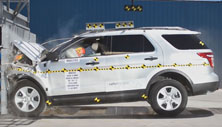
Frontal Crash Test
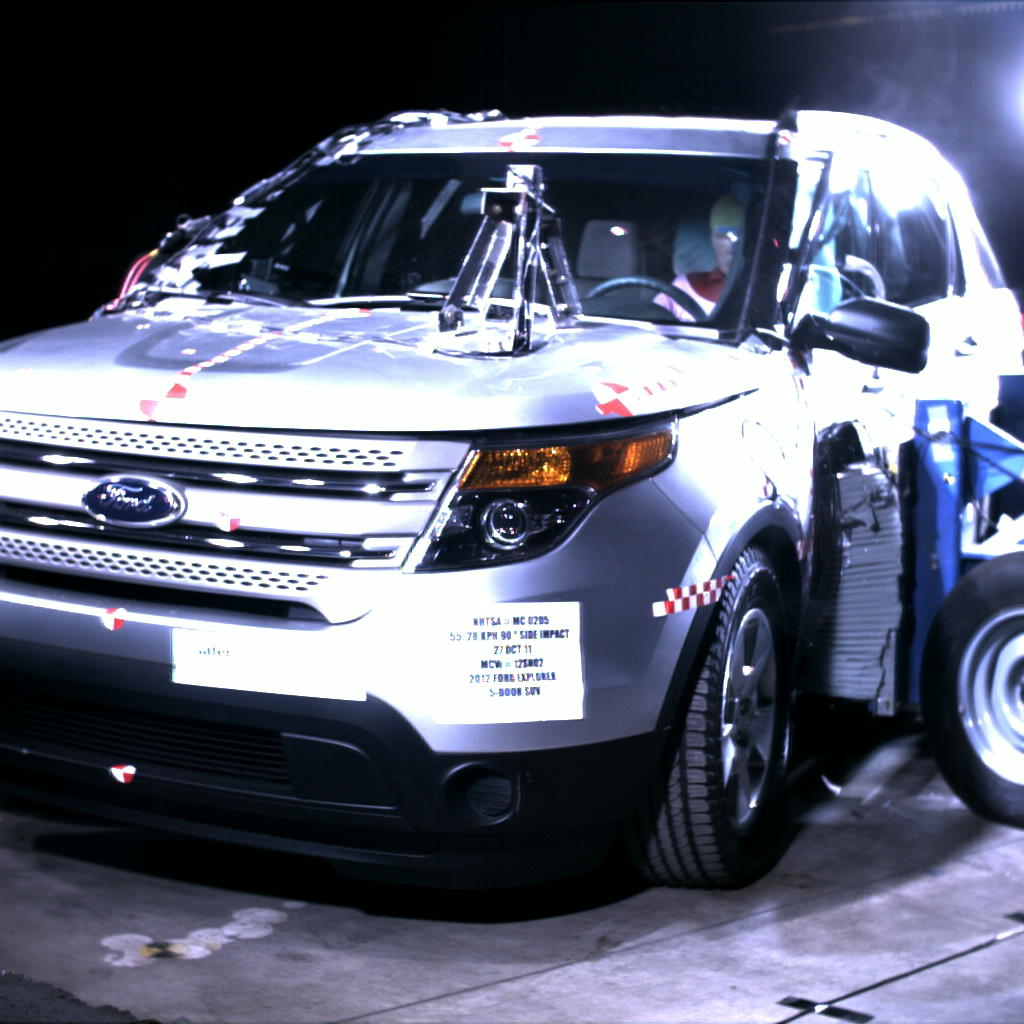
Side Crash Test
Overall Frontal Rating
Driver and Passenger Assessment
Driver Side
Passenger Side
Overall Side Rating
Side Barrier and Side Pole Tests
Driver Side
Passenger Side
Rollover Resistance
16.9% rollover risk in single-vehicle crash
Safety Features
ESC: StandardForward Collision Warning: OptionalLane Departure Warning: Optional
Recall Notices
NHTSANHTSA ID: 24V031000January 19, 2024
STRUCTURE:BODY:ROOF AND PILLARS
Ford Motor Company (Ford) is recalling certain 2011-2019 Explorer vehicles. The A-pillar trim retention clips may not be properly engaged, allowing the trim to detach.
Remedy Status
Dealers will inspect and replace the A-pillar trim as necessary, free of charge. Owner notification letters were mailed on July 18, 2024. Owners may contact Ford customer service at 1-866-436-7332. Ford's number for this recall is 24S02.
NHTSA ID: 21V746000September 22, 2021
SUSPENSION:REAR
Ford Motor Company (Ford) is recalling certain 2011-2013 Explorer vehicles originally sold, or currently registered in Connecticut, Delaware, the District of Columbia, Illinois, Indiana, Iowa, Kentucky, Maine, Maryland, Massachusetts, Michigan, Minnesota, Missouri, New Hampshire, New Jersey, New York, Ohio, Pennsylvania, Rhode Island, Vermont, Virginia, West Virginia, and Wisconsin. These vehicles may be equipped with a cross-axis ball joint (CABJ) replacement part that could seize, and result in a fracture of the outboard section of the rear suspension toe link.
Remedy Status
Dealer will inspect for the presence of a CABJ. If a CABJ of any design is found, the dealer will inspect the tightness of the CABJ, and replace the CABJ, knuckle, and/or toe link as necessary, free of charge. Interim notification letters were mailed November 10, 2021. Owner notification letters were mailed on March 17, 2022. Owners may contact Ford customer service at 1-866-436-7332. Ford's number for this recall is 21S43.
NHTSA ID: 21V537000July 15, 2021
SUSPENSION:REAR
Ford Motor Company (Ford) is recalling certain 2013-2017 Explorer vehicles originally sold, or ever registered, in Connecticut, Delaware, Illinois, Indiana, Iowa, Kentucky, Maine, Maryland, Massachusetts, Michigan, Minnesota, Missouri, New Hampshire, New Jersey, New York, Ohio, Pennsylvania, Rhode Island, Vermont, Virginia, West Virginia, Wisconsin, and the District of Columbia. Exposure to road salt can cause the cross-axis ball joint to corrode and seize, resulting in a fracture of the outboard section of the rear suspension toe link.
Remedy Status
Dealers will inspect and replace as necessary, the cross-axis ball joint (CABJ) knuckle, and replace the rear suspension toe links, free of charge. This recall is an expansion of previous NHTSA recall numbers 16V-245, 19V-435, and 20V-675. Certain vehicles previously repaired will need to return for the new remedy. An interim notification letter notifying owners of the safety risk were mailed on September 10, 2021. Owner notification letters were mailed on March 16, 2022. Owners may contact Ford's customer service at 1-866-436-7332. Ford's number for this recall is 21S32.
NHTSA ID: 20V675000March 12, 2021
SUSPENSION:REAR
Ford Motor Company (Ford) is recalling certain 2013-2017 Explorer vehicles originally sold, or currently registered in Connecticut, Delaware, the District of Columbia, Illinois, Indiana, Iowa, Kentucky, Maine, Maryland, Massachusetts, Michigan, Minnesota, Missouri, New Hampshire, New Jersey, New York, Ohio, Pennsylvania, Rhode Island, Vermont, Virginia, West Virginia, and Wisconsin that were previously repaired under a prior recall numbers 16V-245 or 19V-435. The outboard section of a rear suspension toe link may fracture.
Remedy Status
Ford will notify owners, and dealers will inspect the cross-axis ball joint (CABJ) knuckle attached to the rear suspension toe link and replace it as necessary, free of charge. The recall began November 27, 2020. Owners may contact Ford customer service at 1-866-436-7332. Ford's number for this recall is 20S62.
NHTSA ID: 19V435000June 10, 2019
SUSPENSION:REAR
Ford Motor Company (Ford) is recalling certain 2011-2017 Explorer vehicles. The rear suspension toe links may fracture due to stress on the rear suspension.
Remedy Status
Ford will notify owners, and dealers will replace the rear suspension toe links, and inspect both rear toe link ball joints, replacing the rear wheel knuckle(s), if necessary, free of charge. The recall began June 26, 2019. Owners may contact Ford customer service at 1-866-436-7332. Ford's number for this recall is 19S17.
NHTSA ID: 17E048000August 28, 2017
WHEELS:HUB
Ford Motor Company (Ford) is recalling certain Wheel Hub Bearing assemblies, part number HB5Z-1104-C, incorrectly listed as being for installation on the rear axles of 2011-2017 Ford Explorer 4X2 vehicles. These bearings assemblies were manufactured without a self retention feature, possibly resulting in the separation of the wheel or wheel end.
Remedy Status
Ford will notify the distributors of the hubs specifying that they are to only be used on drive axles. It is believed that none of the hubs were purchased from Ford dealers for the incorrect application. Owners may contact Ford customer service at 1-866-436-7332.
NHTSA ID: 15V812000December 02, 2015
FUEL SYSTEM, GASOLINE
Ford Motor Company (Ford) is recalling certain model year 2013 Explorer, Explorer Police Utility, Taurus, Taurus Police Interceptor, Flex, Lincoln MKS, and Lincoln MKT vehicles. In the affected vehicles, the fuel delivery module may crack, allowing fuel to leak.
Remedy Status
Ford will notify owners, and dealers will replace the fuel delivery module, free of charge. The recall began on December 21, 2015. Owners may contact Ford customer service at 1-866-436-7332. Ford's number for this recall is 13S04-S1.
NHTSA ID: 15V171000March 24, 2015
STRUCTURE:BODY:DOOR
Ford Motor Company (Ford) is recalling certain model year 2011-2013 Explorer vehicles. In the affected vehicles, the interior door handle return spring may unseat, resulting in interior door handle that does not return to the fully stowed position after actuation.
Remedy Status
Ford will notify owners, and dealers will inspect all four of the interior door handles and either repair or replace them, free of charge. The recall began on July 23, 2015. Owners may contact Ford customer service at 1-866-436-7332. Ford's number for this recall is 15S11.
NHTSA ID: 14V286000May 29, 2014
STEERING:ELECTRIC POWER ASSIST SYSTEM
Ford Motor Company (Ford) is recalling certain model year 2011-2013 Ford Explorer vehicles manufactured May 17, 2010, through February 28, 2012. The affected vehicles may experience an intermittent connection in the electric power steering gear, which can cause a loss of the motor position sensor signal resulting in a shut down of the power steering assist.
Remedy Status
Ford will notify owners, and dealers will update the Power Steering Control Module (PSCM) software, free of charge. If a vehicle shows a history of a loss of motor position sensor signal when the vehicle is brought in for the recall remedy, its steering rack assembly will be replaced, free of charge. The recall began on July 23, 2014. Owners may contact Ford customer service at 1-800-392-3673. Ford's number for this recall is 14S06.
NHTSA ID: 13V270000June 26, 2013
LATCHES/LOCKS/LINKAGES
Ford Motor Company (Ford) is recalling certain model year 2013 Ford Explorer, Taurus, and Lincoln MKS vehicles manufactured November 29, 2012, through December 12, 2012. In the affected vehicles, with sufficient door openings and closings, the child safety locks may change from an activated position to a deactivated position without notice.
Remedy Status
Ford will notify owners, and dealers will test the safety locks. If necessary, the locks will be replaced free of charge. The recall began on August 2, 2013. Ford's recall number is 13S07. Owners may contact the Ford customer relationship center at 1-866-436-7332.
NHTSA ID: 13V227000May 31, 2013
FUEL SYSTEM, GASOLINE
Ford is recalling certain model year 2013 Explorer, Taurus, Flex, Fusion, Police Interceptor Sedan and Police Interceptor Utility vehicles; and certain model year 2013 Lincoln MKS, MKT, and MKZ vehicles. In the affected vehicles, the fuel delivery module may develop a crack, allowing fuel to leak.
Remedy Status
Ford will notify owners, and dealers will replace the fuel delivery module, free of charge. The recall began on July 20, 2013. Owners may contact Ford Motor Company Customer Relationship Center at 1-866-436-7332. Ford's recall campaign number is 13S04.
NHTSA ID: 13V109000March 27, 2013
FUEL SYSTEM, GASOLINE:STORAGE:TANK ASSEMBLY
Ford is recalling certain model year 2012 Taurus, Lincoln MKS, and model year 2013 Explorer vehicles manufactured July 19, 2011, through March 15, 2012. In the affected vehicles, the fuel tanks may have a marginally sealed seam in the side of the tank. As a result, the fuel tanks may not provide the expected strength in the event of an impact. The tanks may also leak.
Remedy Status
Ford will notify owners, and dealers will inspect the fuel tanks and replace them as necessary, free of charge. The recall began on May 9, 2013. Ford's recall campaign number is 13S03. Owners may contact Ford Motor Company Customer Relationship Center at 1-866-436-7332.
Investigations
6 totalOn January 27, 2023, the Office of Defects Investigation (ODI) opened PE23-001 to investigate allegations of A-pillar trim panel detachment on model year (MY) 2011-2019 Ford Explorer vehicles. At the time of opening, the office had received 164 Vehicle Owner Questionnaires (VOQs) reporting this failure. ODI has received 671 VOQs regarding this failure, including 1 alleged crash and 2 alleged injuries. Some consumers have reported that the failure occurred while they were driving at highway speeds, with the detached trim panel entering the path of travel of the vehicle behind them, requiring the driver of the following vehicle to take evasive action. It is noteworthy that motorists who experience this type of road hazard are less likely to accurately identify the subject vehicle the item detached from and report the event to the NHTSA. In its April 17, 2023 response to ODI’s information request, Ford provided 175 consumer complaints (including field reports) and 14,162 warranty claims related to A-pillar trim panel detachment. Ford relayed that the subject vehicles utilize a plastic A-pillar bracket, which is bolted to the vehicle structure during assembly. The A-pillar trim panel is attached to the bracket utilizing 7 plastic clips. Contributory factors which have been identified by Ford as leading to the subject defect include incomplete installation at the assembly plant, inadequate part stack up, damage to fasteners during installation, and failure to follow proper repair procedure during windshield replacements or other services. On January 19, 2024, Ford filed safety recall 24V-031 for MY 2011-2019 Ford Explorer vehicles to address the subject defect. In the Part 573 Safety Recall Report, Ford identified that a detached A-pillar trim panel can create a road hazard for other road users, increasing the risk of a crash. The recall remedy includes an inspection of the existing A-pillar trim panel and, if necessary, the replacement of the component. The remedy A-pillar trim panels will be installed with an additional adhesive for robustness and utilize an inspection procedure to ensure full engagement of all the retention clips during installation. In view of the recall action being taken by Ford, ODI is closing this Preliminary Evaluation. The agency reserves the right to take additional action if warranted by future circumstances. To review the reports cited in the Closing Resume ODI Report Identification Number document, go to NHTSA.gov.
Component: STRUCTURE:BODY:ROOF AND PILLARSOpened: Jan 27, 2023Closed: Feb 8, 2024Related recall: 24V031
During the EA17-002 investigation, the agency reviewed and analyzed reports of exhaust odors in the passenger cabins of Model Year 2011 to 2017 Ford Explorers. This investigation required an approach that incorporated knowledge and expertise from the automotive, medical, environmental health, and occupational safety fields. The agency conducted an in-depth investigation that encompassed the review of over 6,500 consumer complaints, conducting field inspections, and testing the relevant vehicles, both independently and in coordination with Ford and other entities. During the investigation, the evolution of Ford service bulletins intended to reduce the level of exhaust odors and carbon monoxide (CO) entering the occupant compartment was examined and independent tests to evaluate the effectiveness of the final Field Service Actions (FSA) for both consumer and police vehicles were conducted. As part of the investigation, the agency also examined the effects of cracked exhaust mani-cats on the measured CO levels in the vehicles and tested the FSA repairs to ensure they did not adversely impact occupant compartment CO levels due to cracked mani-cats.The investigation identified upfitting issues for Police Interceptor vehicles. Upfitting (sirens, lights, cages, auxiliary power, etc.) is typically performed by governmental fleet operations, independent repair facilities, or local Ford dealers after the sale of the new vehicle. Sealing issues caused by upfitting were responsible for the highest measured carbon monoxide levels in tested vehicles. The police FSA instructs how to inspect the quality of the vehicle upfits and how to properly seal any leaks caused by these upfits, at no cost to the police agency. Similarly, the highest CO levels measured in consumer vehicles were usually traced to sealing issues caused by rear crash damage where the repairs did not ensure sealing integrity. The most recent Ford FSA procedure for both the police (17B25) and consumer vehicles (17N03) includes an HVAC reprogramming operation. Tests by Ford and NHTSA have demonstrated a substantial reduction of CO levels due solely to the HVAC reprogramming. Other FSA repairs also demonstrated measurable contributions to CO level reductions during controlled tests.Throughout the investigation, vehicles accurately measured with higher levels of carbon monoxide were almost always affected by upfitter alterations, damage, or other causes compromising rear passenger cabin seals.NHTSA received thousands of reports alleging odors which triggered a variety of physiological responses, predominately nausea, headaches, and lightheadedness. NHTSA focused the investigation on accurately measuring vehicle CO levels, and accurately measuring carboxyhemoglobin (COHB) levels from properly administered blood tests. Using rigorous test methods to produce exhaust gas intrusion in vehicles with a properly performed FSA, occupant compartment CO levels remained below current environmental limits for CO in any environment (EPA ambient air quality standards). Furthermore, even without FSA repairs, no vehicles unaffected by upfitter issues or prior crash damage were identified with CO levels that exceed accepted occupational CO exposure levels. This investigation finds that the 2011-2017 Ford Explorer vehicles when accurately measured produce occupant compartment CO levels which fall below current accepted health standards, and could not identify COHB levels for vehicle drivers or other occupants, which exceeded thresholds for acute physiological effects. Therefore, the agency has not identified a defect that represents an unreasonable risk to motor vehicle safety.This inve
Component: ENGINE AND ENGINE COOLING:EXHAUST SYSTEM:MANIFOLD/HEADER/MUFFLER/TAIL PIPEOpened: Jul 27, 2017Closed: Jan 17, 2023
During the National Highway Traffic Safety Administration?s (NHTSA?s) investigation into the Ford carbon monoxide allegations, the Office of Defects Investigation (ODI) identified additional Vehicle Owner Questionnaire (VOQ) reports with similar exhaust odor claims.Presently, ODI has identified 791 VOQs for Model Year 2011-2017 Ford Explorers pertaining to exhaust odor claims.ODI has identified three crashes and 41 injuries potentially linked this issue.The reported injuries range from unspecified to loss of consciousness, with the majority being nausea, headaches, or dizziness ? all of which can be symptomatic of carbon monoxide exposure.Additionally, Ford provided 2,400 reports including owner complaints, warranty claims, dealer field reports, and legal claims, that involve 2,051 vehicles that may be connected to the exhaust odor issue.NHTSA's Vehicle Test and Research Center tested multiple vehicles, including complaint vehicles, during the investigation.ODI also conducted field inspections of complaint vehicles and crashes involving police units that occurred while the officers were on duty.When possible, data was collected to quantify carbon monoxide levels in the examined vehicles.Based on the information gathered to date, NHTSA upgraded this investigation to an Engineering Analysis (EA17-002).
Component: ENGINE AND ENGINE COOLING:EXHAUST SYSTEMOpened: Jul 1, 2016Closed: Sep 12, 2017
Owner Complaints
2209 totalELECTRICAL SYSTEM
Apr 26, 2026
Odometer Fraud. The contact purchased a 2013 Ford Explorer. It was discovered that there was a mileage discrepancy. The vehicle was a private sale. At the time of purchase, the vehicle mileage was 136,000; at the time of registration, it was discovered that the mileage was 251,39...
Preview excerpt
STEERING
Apr 13, 2026
The contact owns a 2013 Ford Explorer. The contact stated that while driving approximately 30 MPH, the steering wheel failed to turn left or right. The message "Power Steering Assist Fault" was displayed. The contact stopped, turned off, and restarted the vehicle several times to...
Preview excerpt
STRUCTURE
Apr 12, 2026
After more than two years with an open recall, Ford has not been able to repair my 2013 Ford Explorer due to an inability to source the replacement parts. On Sunday, April 12th the defective A-pillar trim on the driver’s side detached while driving at highway speeds on the inters...
Preview excerpt
STEERING
Apr 9, 2026
The contact owns a 2013 Ford Explorer. While driving at slow speeds, the contact stated that while turning the steering wheel there was a lack of resistance, and there was a pulsating sensation in the steering wheel. No warning lights were illuminated. The dealer was notified of ...
Preview excerpt
ELECTRICAL SYSTEM,SEAT BELTS,BACK OVER PREVENTION
Mar 25, 2026
The rear reverse camera malfunctions and glitches. Often the screen turning green when reversing, sometimes screen is black or no color view and most times the camera if reversing to left or appear as to the right or vise versa and sometimes it’s normal but rarely. The control bu...
Preview excerpt
UNKNOWN OR OTHER
Mar 22, 2026
My vehicles exterior A-pillar trim is coming off and pieces flew off on highway. I was told to contact Ford.
STEERING,ELECTRICAL SYSTEM,WHEELS
Mar 20, 2026
While driving a 2013 Ford Explorer, the vehicle experienced an electrical issue that caused the power steering system to malfunction. The power steering assist suddenly failed, making the steering wheel extremely difficult to turn. The failure occurred suddenly and at the time of...
Preview excerpt
STEERING
Mar 9, 2026
The contact owns a 2013 Ford Explorer. The contact stated that while driving at an undisclosed speed, the steering wheel seized, with the power steering warning light illuminated. The contact stated that the steering wheel became difficult to turn. The vehicle was taken to an ind...
Preview excerpt
STRUCTURE
Mar 6, 2026
The contact owns a 2013 Ford Explorer. The contact stated that while driving at an undisclosed speed, the driver's side exterior A-pillar trim detached and struck another vehicle. No warning lights were illuminated. The contact received notification of NHTSA Campaign Number: 24V0...
Preview excerpt
STEERING,UNKNOWN OR OTHER,ENGINE
Feb 23, 2026
I am submitting a formal safety complaint regarding a severe design defect in the 3.5L V6 engine of my 2013 Ford Explorer. The vehicle is equipped with an internal, chain-driven water pump that is currently failing at 100000 miles, as evidenced by coolant actively draining from ...
Preview excerpt
Showing 10 recent complaints from 2,209 total
View Full Complaint LogCompare Related Vehicles
Why Compare These Pages
The strongest comparison flow is usually: exact vehicle-year page, then nearby years of the same model, then other 2013 Ford models. That sequence helps separate one-off year spikes from broader make-wide patterns.
More Ford Explorer Years
2014 Ford ExplorerCompare this year against 2013 for complaint and recall shifts.7r4i1,657c2012 Ford ExplorerCompare this year against 2013 for complaint and recall shifts.7r4i815c2015 Ford ExplorerCompare this year against 2013 for complaint and recall shifts.9r5i1,720c2011 Ford ExplorerCompare this year against 2013 for complaint and recall shifts.8r4i1,183c2016 Ford ExplorerCompare this year against 2013 for complaint and recall shifts.14r2i2,398c2010 Ford ExplorerCompare this year against 2013 for complaint and recall shifts.2r1i115c
More 2013 Ford Models
2013 Ford F-150Another 2013 Ford option for same-year comparison.3r3i2,910c2013 Ford EscapeAnother 2013 Ford option for same-year comparison.18r3i2,738c2013 Ford EdgeAnother 2013 Ford option for same-year comparison.2r1i2,420c2013 Ford FocusAnother 2013 Ford option for same-year comparison.11r3i2,099c2013 Ford FusionAnother 2013 Ford option for same-year comparison.18r5i1,935c2013 Ford FiestaAnother 2013 Ford option for same-year comparison.3r3i666c
Frequently Asked Questions
How many recalls does the 2013 Ford Explorer have?
The 2013 Ford Explorer has 12 recalls recorded by NHTSA.
How many complaints have been filed for the 2013 Ford Explorer?
NHTSA has received 2,209 owner-reported complaints for the 2013 Ford Explorer.
What is the NHTSA safety rating for the 2013 Ford Explorer?
The 2013 Ford Explorer received an overall safety rating of 5 out of 5 stars from NHTSA.
What are the most common problems with the 2013 Ford Explorer?
The most commonly reported complaint categories for the 2013 Ford Explorer are steering (680 reports), structure (344 reports), unknown or other (239 reports).
Does the 2013 Ford Explorer have any recalls?
Yes. NHTSA has 12 recalls on record for the 2013 Ford Explorer. Scroll up to review the published recall summaries, consequences, and remedies. To check for unrepaired recalls on your specific vehicle, use your VIN at nhtsa.gov/recalls.
Check Another Vehicle
Look up recalls and complaints for any year, make, and model.
This page summarizes publicly available data from the National Highway Traffic Safety Administration (NHTSA). Complaint counts reflect reports submitted to NHTSA by vehicle owners and do not by themselves prove defect severity or vehicle safety. Safety ratings may not be available for all vehicle-years. This site is not affiliated with NHTSA or any vehicle manufacturer. For official information, visit the official NHTSA page for this vehicle.