Honda · CR-V · 2017
2017 Honda CR-V
6
Recalls
1,708
Complaints
5/5
Safety Rating
The 2017 Honda CR-V has 6 recalls and 1,708 owner-reported complaints on file with NHTSA. Overall safety rating: 5 out of 5 stars. Most reported issue: engine (228 reports).
Source: NHTSA Public Records · Updated May 4, 2026
Research Context
The 2017 Honda CR-V page works best as a research starting point. Complaint totals show how much owner-reported activity exists, while recalls and investigations help show whether any of that activity turned into formal safety action.
Because this is a newer-era vehicle page, it usually helps to compare this year against nearby model years before deciding whether a complaint pattern looks isolated or persistent. On this page, the most prominent complaint area is engine with 228 reported complaints.
Best Research Moves
- Use the complaint log to see whether the 2017 Honda CR-V reports cluster around one repeated symptom or spread across multiple systems.
- Compare the recall list with the complaint mix to see whether the most reported issues overlap with formal NHTSA safety campaigns.
- Check the linked investigations for extra ODI context if you want to see whether owner complaints escalated into formal defect review.
Key Takeaways
- The 2017 Honda CR-V currently shows 6 NHTSA recalls listed on this page and 1,708 owner-reported complaints.
- This page currently shows 2 NHTSA investigations linked to this page.
- This page reflects complaint volume, recall history, and NHTSA test data, but it does not diagnose causes or rank reliability by itself.
- Safety data currently shows 5/5 overall NHTSA safety rating.
- The most frequently reported complaint categories on this page are engine (228), electrical system (175), unknown or other (158).
- Vehicle
- 2017 Honda CR-V
- Recalls
- 6
- Complaints
- 1708
- Safety Rating
- 5/5
How to Interpret This Page
This page combines three types of NHTSA data: recall campaigns (official manufacturer or government actions), owner complaints (unverified consumer reports), and crash test ratings (where available). A vehicle with many complaints is not necessarily less reliable — complaint volume correlates with sales volume and vehicle age. Recalls indicate identified defects, not overall quality. To compare this model year with others, use the year navigation in the sidebar or return to the model overview page.
If you are researching a used vehicle, start with the complaint categories, compare them against the recall list, and then check nearby model years to see whether the same issue profile repeats. That usually produces a better buying or research signal than treating the raw complaint total as a standalone safety ranking.
NHTSA Crash Test Performance
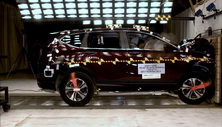
Frontal Crash Test
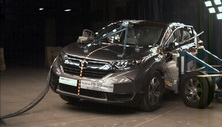
Side Crash Test
Overall Frontal Rating
Driver and Passenger Assessment
Driver Side
Passenger Side
Overall Side Rating
Side Barrier and Side Pole Tests
Driver Side
Passenger Side
Rollover Resistance
16.3% rollover risk in single-vehicle crash
Safety Features
ESC: StandardForward Collision Warning: OptionalLane Departure Warning: Optional
Recall Notices
NHTSANHTSA ID: 23V858000December 18, 2023
FUEL SYSTEM, GASOLINE:DELIVERY:FUEL PUMP
Honda (American Honda Motor Co.) is recalling certain 2013-2023 Honda Accord, Civic Coupe, Civic Sedan, Civic Hatchback, Civic Type R, CR-V, HR-V, Ridgeline, Odyssey, Acura ILX, MDX, MDX Hybrid, RDX, RLX, TLX, 2019-2022 Honda Insight, Passport, 2020 Honda CR-V Hybrid, 2018-2019 Honda Clarity PHEV, Fit, and 2015-2020 Honda Accord Hybrid, Pilot, Acura NSX vehicles. The fuel pump inside the fuel tank may fail.
Remedy Status
Dealers will replace the fuel pump module, free of charge. Owner letters were mailed September 6, 2024. Owners may contact Honda customer service at 1-888-234-2138. Honda's numbers for this recall are KGC and KGD. This recall is an expansion of NHTSA recall numbers 21V-215 and 20V-314.
NHTSA ID: 23V524000July 27, 2023
EQUIPMENT:OTHER:LABELS
Honda (American Honda Motor Co.) is recalling certain 2017, 2020, and 2022 CR-V vehicles. The certification label on the driver's side door states incorrect Gross Vehicle Weight Rating (GVWR), Gross Axle Weight Rating (GAWR), and tire size information. As such, these vehicles fail to comply with the requirements of Federal Motor Vehicle Safety Standard number 110, "Tire Selection and Rims."
Remedy Status
Dealers will install a new corrected label, free of charge. Owner notification letters were mailed September 18, 2023. Owners may contact Honda customer service at 1-888-234-2138. Honda's number for this recall is CF7.
NHTSA ID: 23V158000March 09, 2023
SEAT BELTS:FRONT:BUCKLE ASSEMBLY
Honda (American Honda Motor Co.) is recalling certain 2017-2020 CR-V, 2018-2019 Accord and Accord Hybrid, 2018-2020 Odyssey, 2019 Insight, and 2019-2020 Acura RDX vehicles. A manufacturing issue with the front seat belts may cause the seat belt buckle channel to interfere with the release button, preventing the seat belt buckle from latching.
Remedy Status
Dealers will replace the driver and front passenger seat belt buckle release buttons or the buckle assemblies as necessary, free of charge. Owner notification letters were mailed April 18, 2023. Owners may contact Honda customer service at 1-888-234-2138. Honda's numbers for this recall are NDA, QDB, BDC, MDD, LD9. TDF, FDG, ODH, YDI, ZDE.
NHTSA ID: 18V663000September 27, 2018
STEERING:ELECTRIC POWER ASSIST SYSTEM
Honda (American Honda Motor Co.) is recalling certain 2017-2018 Honda Civic and CR-V vehicles. The magnet that controls the torque sensor output signal for the electronic power steering system may not be properly secured, allowing the magnet to become dislodged. During a full lock turn, the dislodged magnet may cause steering assist to be applied in the opposite direction.
Remedy Status
Honda will notify owners, and dealers will replace the steering gearbox assembly, free of charge. The recall began November 9, 2018. Owners may contact Honda customer service at 1-888-234-2138. Honda's numbers for this recall are C2N, P2O.
NHTSA ID: 17V442000July 13, 2017
FUEL SYSTEM, GASOLINE:DELIVERY:HOSES, LINES/PIPING, AND FITTINGS
Honda (American Honda Motor Co.) is recalling certain 2017 Honda CR-V 2WD and AWD vehicles. The affected vehicles have a fuel supply pipe that may have been improperly manufactured, possibly resulting in the pipe disconnecting and leaking while driving.
Remedy Status
Honda will notify owners, and dealers will replace the fuel supply pipe, free of charge. The recall began August 31, 2017. Owners may contact Honda customer service at 1-888-234-2138. Honda's number for this recall is KH1.
NHTSA ID: 17V256000April 18, 2017
EQUIPMENT:OTHER:LABELS
Honda (American Honda Motor Co.) is recalling certain 2017 CR-V and Acura RDX vehicles. The Certification Labels on the affected vehicles were printed with ink that may be inadvertently wiped away with an alcohol solvent. As such, these vehicles fail to comply with the requirements of 49 CFR Part 567, "Certification."
Remedy Status
Honda and Acura will notify owners, and dealers will replace the Certification Label, free of charge. The recall began June 2017. Owners may contact Honda customer service at 1-888-234-2138. Honda's numbers for this recall are KF3 (CR-V)and KF4 (RDX).
Investigations
2 totalOn February 21, 2022, the Office of Defects Investigation (ODI) opened Preliminary Evaluation (PE22003) to assess reports of inadvertent activation of the Collision Mitigation Braking System (CMBS), an automatic emergency braking (AEB) system, in model year 2017-2019 Honda CR-V and 2018-2019 Honda Accord vehicles. The reports allege that activation of the AEB system occurs while driving with no apparent obstruction in the vehicle's forward path, resulting in sudden vehicle deceleration. Honda indicated that they were aware of a total of X,XXX reports that may relate to the alleged defect. Honda provided analysis of the alleged defect and alleges that some customers possibly had an inadequate understanding of the CMBS and its limitations. However, many consumer complaints allege that Honda dealerships were unable to reproduce the condition or state that they were informed that this is considered normal CMBS operation. To date, ODI has received a total of 1,294 consumer complaints of inadvertent activation of CMBS in 2017-2022 Honda CR-V and 2018-2022 Honda Accord vehicles. A total of 31 complaints alleged a crash and 50 alleged an injury. The Total column in the Failure Report Summary removes duplicate reports and shows the total number of reports with unique VINs from all Manufacturer, ODI, and EWR data sources. In some cases, there were multiple reports associated with a particular vehicle in which recurring failures were alleged. In total, there were X,XXX reports, 93 injury incidents and 47 crashes involving vehicles with unique VINs that may relate to the alleged defect. PE22-003 has been upgraded to an Engineering Analysis to further assess the scope, frequency, and potential safety related consequences of the inadvertent AEB activations. The scope has been expanded to include assessment of model year 2020-2022 Honda CR-V and Accord vehicles. To review the ODI reports cited in the Opening Resume ODI Report Identification Number document, go to NHTSA.gov.
Component: FORWARD COLLISION AVOIDANCE: AUTOMATIC EMERGENCY BRAKINGOpened: Apr 15, 2024
On February 21, 2022, the Office of Defects Investigation (ODI) opened Preliminary Evaluation (PE22003) to assess reports of inadvertent activation of the Collision Mitigation Braking System (CMBS), an automatic emergency braking (AEB) system, in model year 2017-2019 Honda CR-V and 2018-2019 Honda Accord vehicles. The reports allege that activation of the AEB system occurs while driving with no apparent obstruction in the vehicle's forward path, resulting in sudden vehicle deceleration. Honda indicated that they were aware of a total of X,XXX reports that may relate to the alleged defect. Honda provided analysis of the alleged defect and alleges that some customers possibly had an inadequate understanding of the CMBS and its limitations. However, many consumer complaints allege that Honda dealerships were unable to reproduce the condition or state that they were informed that this is considered normal CMBS operation. To date, ODI has received a total of 1,081 consumer complaints of inadvertent activation of CMBS in the subject vehicles. A total of 24 complaints alleged a crash and 42 alleged an injury. The Total column in the Failure Report Summary removes duplicate reports and shows the total number of reports with unique VINs from all Manufacturer, ODI, and EWR data sources. In some cases, there were multiple reports associated with a particular vehicle in which recurring failures were alleged. In total, there were X,XXX reports, 84 injury incidents and 40 crashes involving vehicles with unique VINs that may relate to the alleged defect. PE22003 has been upgraded to an Engineering Analysis (EA24002) to further assess the scope, frequency, and potential safety related consequences of the inadvertent AEB activations. Further the scope has been expanded to include assessment of model year 2020-2022 Honda CR-V and Accord vehicles. To review the ODI reports cited in the Opening Resume ODI Report Identification Number document, go to NHTSA.gov.
Component: FORWARD COLLISION AVOIDANCE: AUTOMATIC EMERGENCY BRAKINGOpened: Feb 21, 2022Closed: Apr 18, 2024
Owner Complaints
1708 totalELECTRICAL SYSTEM,ENGINE,FUEL/PROPULSION SYSTEM
Apr 25, 2026
5th generation (2017-2022) Honda CRV displaying ALL driver assistance system errors (stability control, cruise control, emergency anti-collision etc), check engine light, tire pressure monitor malfunction, parking brake, and some other lights. *OBDII scan reads back P0303* Batt...
Preview excerpt
ENGINE
Apr 13, 2026
Head gasket failed due to bolts stretching allowing coolant to leak into the cylinder on cold starts until the engine warmed and sealed itself. Was confirmed by Honda technician be causing a misfire on cylinder 4 throwing code p0304 and all warning lights on dash going off during...
Preview excerpt
FORWARD COLLISION AVOIDANCE
Apr 10, 2026
I have experienced instances of the brakes being aggressively applied unexpectedly when no other vehicles or stationary objects are nearby to trigger the collision avoidance system. Any car following immediately behind would have rear-ended me. This has occurred a few times in th...
Preview excerpt
FUEL/PROPULSION SYSTEM
Apr 7, 2026
I have a 2017 CRV 1.5T. I currently have confirmed fuel dilution and a P219F (emission systems problem) code. Records show TSB 18-114 was performed as Honda tried to fix the fuel dilution problem through an ECM software update but it did not fix the issue. They followed it up wit...
Preview excerpt
ENGINE
Apr 3, 2026
CRV 2017 Head Gasket on engine Failure
ENGINE AND ENGINE COOLING
Apr 1, 2026
The contact owns a 2017 Honda CR-V. The contact stated that the engine was occasionally overheating. The vehicle was taken to a dealer, where it was diagnosed with a fractured A/C discharge hose and refrigerant leak. The vehicle was not repaired. The contact stated that the vehic...
Preview excerpt
STEERING
Apr 1, 2026
Steering gets "sticky". Brought car to Honda dealer and just by test driving the car they want $6000 to replace bad bearings, steering motor and gearbox. No diagnostic test was done or parts looked at physically. I brought car to a local mechanic who also test drove car and did...
Preview excerpt
ENGINE,FUEL/PROPULSION SYSTEM
Mar 30, 2026
On March 28, 2026, the check engine light illuminated on my 2017 Honda CR-V EX (VIN [XXX] ) at 59,057 miles. I pulled diagnostic trouble codes with a consumer OBD-II reader and recorded P0301, P0302, and P0303. On March 30, 2026, I contacted American Honda Customer Service to req...
Preview excerpt
ENGINE,FUEL/PROPULSION SYSTEM
Mar 28, 2026
System/Component Involved: Fuel System / Fuel Injectors / High-Pressure Fuel Joint Pipe Description of Incident and Safety Risk: My 2017 Honda CR-V (1.5T engine) experienced a fuel system failure evidenced by DTC P0172 and a failed AF cylinder test, confirmed by an authorized Ho...
Preview excerpt
ELECTRICAL SYSTEM
Mar 24, 2026
been having trouble with the climate control system and the radio screen will black out unexpectedly. this has been going on for years. last night, 3/24/2026, I came home and as I put the vehicle in park, all of a sudden the dashboard lights up with all sorts of faults. when I we...
Preview excerpt
Showing 10 recent complaints from 1,708 total
View Full Complaint LogCompare Related Vehicles
Why Compare These Pages
The strongest comparison flow is usually: exact vehicle-year page, then nearby years of the same model, then other 2017 Honda models. That sequence helps separate one-off year spikes from broader make-wide patterns.
More Honda CR-V Years
2018 Honda CR-VCompare this year against 2017 for complaint and recall shifts.4r3i2,007c2016 Honda CR-VCompare this year against 2017 for complaint and recall shifts.3r1i386c2019 Honda CR-VCompare this year against 2017 for complaint and recall shifts.7r3i1,025c2015 Honda CR-VCompare this year against 2017 for complaint and recall shifts.3r2i661c2020 Honda CR-VCompare this year against 2017 for complaint and recall shifts.6r2i312c2014 Honda CR-VCompare this year against 2017 for complaint and recall shifts.1r2i581c
More 2017 Honda Models
2017 Honda PilotAnother 2017 Honda option for same-year comparison.2r4i871c2017 Honda CivicAnother 2017 Honda option for same-year comparison.5r561c2017 Honda AccordAnother 2017 Honda option for same-year comparison.2r515c2017 Honda RidgelineAnother 2017 Honda option for same-year comparison.7r5i328c2017 Honda HR-VAnother 2017 Honda option for same-year comparison.114c2017 Honda Accord HybridAnother 2017 Honda option for same-year comparison.1r1i45c
Frequently Asked Questions
How many recalls does the 2017 Honda CR-V have?
The 2017 Honda CR-V has 6 recalls recorded by NHTSA.
How many complaints have been filed for the 2017 Honda CR-V?
NHTSA has received 1,708 owner-reported complaints for the 2017 Honda CR-V.
What is the NHTSA safety rating for the 2017 Honda CR-V?
The 2017 Honda CR-V received an overall safety rating of 5 out of 5 stars from NHTSA.
What are the most common problems with the 2017 Honda CR-V?
The most commonly reported complaint categories for the 2017 Honda CR-V are engine (228 reports), electrical system (175 reports), unknown or other (158 reports).
Does the 2017 Honda CR-V have any recalls?
Yes. NHTSA has 6 recalls on record for the 2017 Honda CR-V. Scroll up to review the published recall summaries, consequences, and remedies. To check for unrepaired recalls on your specific vehicle, use your VIN at nhtsa.gov/recalls.
Check Another Vehicle
Look up recalls and complaints for any year, make, and model.
This page summarizes publicly available data from the National Highway Traffic Safety Administration (NHTSA). Complaint counts reflect reports submitted to NHTSA by vehicle owners and do not by themselves prove defect severity or vehicle safety. Safety ratings may not be available for all vehicle-years. This site is not affiliated with NHTSA or any vehicle manufacturer. For official information, visit the official NHTSA page for this vehicle.