Mazda · Mazda6 · 2016
2016 Mazda Mazda6
1
Recall
75
Complaints
5/5
Safety Rating
The 2016 Mazda Mazda6 has 1 recall and 75 owner-reported complaints on file with NHTSA. Overall safety rating: 5 out of 5 stars. Most reported issue: power train (7 reports).
Source: NHTSA Public Records · Updated Apr 28, 2026
Research Context
The 2016 Mazda Mazda6 page works best as a research starting point. Complaint totals show how much owner-reported activity exists, while recalls and investigations help show whether any of that activity turned into formal safety action.
Because this is a newer-era vehicle page, it usually helps to compare this year against nearby model years before deciding whether a complaint pattern looks isolated or persistent. On this page, the most prominent complaint area is power train with 7 reported complaints.
Best Research Moves
- Use the complaint log to understand what owners were actually reporting instead of relying only on the raw complaint total.
- Review the recall section even if the total is smaller, because a limited number of recalls can still point to meaningful safety actions.
- This page is primarily a complaints-and-recalls research surface, so compare nearby model years before treating the complaint total as a standalone verdict.
Key Takeaways
- The 2016 Mazda Mazda6 currently shows 1 NHTSA recall listed on this page and 75 owner-reported complaints.
- This page currently shows no linked NHTSA investigations.
- This page reflects complaint volume, recall history, and NHTSA test data, but it does not diagnose causes or rank reliability by itself.
- Safety data currently shows 5/5 overall NHTSA safety rating.
- The most frequently reported complaint categories on this page are power train (7), seats (7), unknown or other (6).
- Vehicle
- 2016 Mazda Mazda6
- Recalls
- 1
- Complaints
- 75
- Safety Rating
- 5/5
How to Interpret This Page
This page combines three types of NHTSA data: recall campaigns (official manufacturer or government actions), owner complaints (unverified consumer reports), and crash test ratings (where available). A vehicle with many complaints is not necessarily less reliable — complaint volume correlates with sales volume and vehicle age. Recalls indicate identified defects, not overall quality. To compare this model year with others, use the year navigation in the sidebar or return to the model overview page.
If you are researching a used vehicle, start with the complaint categories, compare them against the recall list, and then check nearby model years to see whether the same issue profile repeats. That usually produces a better buying or research signal than treating the raw complaint total as a standalone safety ranking.
NHTSA Crash Test Performance
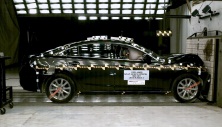
Frontal Crash Test
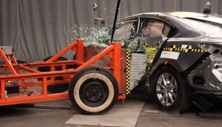
Side Crash Test
Overall Frontal Rating
Driver and Passenger Assessment
Driver Side
Passenger Side
Overall Side Rating
Side Barrier and Side Pole Tests
Driver Side
Passenger Side
Rollover Resistance
10.3% rollover risk in single-vehicle crash
Safety Features
ESC: StandardForward Collision Warning: OptionalLane Departure Warning: Optional
Recall Notices
NHTSANHTSA ID: 17V546000August 31, 2017
STEERING:ELECTRIC POWER ASSIST SYSTEM
Mazda North American Operations (Mazda) is recalling certain 2016 Mazda6 vehicles. Debris from the welding process during manufacturing of the front passenger seat frame may damage the occupant classification system (OCS) wiring.
Remedy Status
Mazda will notify owners, and dealers will attach a protective pad on the seat frame. If the OCS harness is damaged, insulating tape will be applied to the harness. These repairs will be performed free of charge. The recall began October 26, 2017. Owners may contact Mazda customer service at 1-800-222-5500. Mazda's number for this recall is 1517H.
Owner Complaints
75 totalVEHICLE SPEED CONTROL,SERVICE BRAKES,ENGINE
Apr 14, 2026
The vehicle exhibits dangerous electronic malfunctions. A licensed technician (MV-113255) has confirmed a sporadic unintended acceleration defect where the cruise control 'decrease' button causes the vehicle to increase speed. Additionally, the vehicle repeatedly enters 'Limp Mod...
Preview excerpt
ELECTRICAL SYSTEM,SEATS
Oct 12, 2025
The contact owns a 2016 Mazda Mazda6. The contact stated that after her husband had driven for approximately 2 hours with the seat heater activated, the passenger’s side seat overheated, and the seat started smoking. The driver stated that the seat heating element overheated and ...
Preview excerpt
AIR BAGS,SEAT BELTS,SEATS
Apr 30, 2025
My seat doesn’t detect if passanger is in seat so my air bag engine light goes on and off it was recalled and mazda supposedly cleared the issue but seems like they didnt fix it the recall properly
AIR BAGS
Feb 26, 2025
My passenger air bag doesn’t turn on when passenger is in vehicle, sensor for air bag turns on and off as if it can’t determine if a person is on the seat. My dashboard has the SRS OCS light on. My vehicle has already been seen by Mazda to fix the recall but I am afraid to drive ...
Preview excerpt
FUEL/PROPULSION SYSTEM
Dec 8, 2024
Fuel smell in & outside of vehicle after fuel fill, being a retired Master Technician I decided to investigate this and after removing the the fuel tank access door under the rear seat I was shocked to see that on an 8 year old vehicle the fuel sender retainer is completely ruste...
Preview excerpt
TIRES
Nov 23, 2024
I bought the Bridgestone tires in Sept 2023 from Walmart. On Nov 23, 2024, I went to Walmart auto center to have 4 Bridgestone tires rotated and balanced. The tech discovered severe bead separation in 3 of 4 tires. I had to buy 4 new tires. I have pictures of the tires with...
Preview excerpt
SUSPENSION,POWER TRAIN
Sep 24, 2024
The contact owns a 2016 Mazda Mazda6. The contact stated that while driving at an undisclosed speed, there was an abnormal sound coming from the vehicle. The transmission warning light was illuminated. The vehicle was not diagnosed or repaired. The contact associated the failure ...
Preview excerpt
UNKNOWN OR OTHER
Jun 12, 2024
Moonroof explosion Moonroof had spontaneous explosion while driving on highway. No objects were seen flying towards front of car prior to explosion. Driver and 1 passenger in front seat. Sun shade partially open resulting in glass coming into the car. No accident or injury occurr...
Preview excerpt
VEHICLE SPEED CONTROL,FORWARD COLLISION AVOIDANCE
May 22, 2024
When driving, after a period of 10 - 20 minutes usually, of the adaptive cruise being on (not necessarily in use), the buttons on the steering wheel will re-map. That is, the + button for adjusting the cruise speed up by 1 mph increments will switch with the - button that adjus...
Preview excerpt
ENGINE
Nov 30, 2023
There is a bearing in the crankshaft that looks like it’s not up to spec. No warning lights came on, car suddenly lost power on the highway. Fortunately no one was injured though it was a very scary situation. Mechanic took a look inside the engine and said a main bearing stud br...
Preview excerpt
Showing 10 recent complaints from 75 total
View Full Complaint LogCompare Related Vehicles
Why Compare These Pages
The strongest comparison flow is usually: exact vehicle-year page, then nearby years of the same model, then other 2016 Mazda models. That sequence helps separate one-off year spikes from broader make-wide patterns.
More Mazda Mazda6 Years
2017 Mazda Mazda6Compare this year against 2016 for complaint and recall shifts.1r56c2015 Mazda Mazda6Compare this year against 2016 for complaint and recall shifts.3r60c2018 Mazda Mazda6Compare this year against 2016 for complaint and recall shifts.2r53c2014 Mazda Mazda6Compare this year against 2016 for complaint and recall shifts.4r137c2019 Mazda Mazda6Compare this year against 2016 for complaint and recall shifts.1r5c2013 Mazda Mazda6Compare this year against 2016 for complaint and recall shifts.4r22c
More 2016 Mazda Models
2016 Mazda CX-5Another 2016 Mazda option for same-year comparison.5r499c2016 Mazda CX-9Another 2016 Mazda option for same-year comparison.102c2016 Mazda Mazda3Another 2016 Mazda option for same-year comparison.6r102c2016 Mazda CX-3Another 2016 Mazda option for same-year comparison.3r47c2016 Mazda MX-5 MiataAnother 2016 Mazda option for same-year comparison.3r33c
Frequently Asked Questions
How many recalls does the 2016 Mazda Mazda6 have?
The 2016 Mazda Mazda6 has 1 recall recorded by NHTSA.
How many complaints have been filed for the 2016 Mazda Mazda6?
NHTSA has received 75 owner-reported complaints for the 2016 Mazda Mazda6.
What is the NHTSA safety rating for the 2016 Mazda Mazda6?
The 2016 Mazda Mazda6 received an overall safety rating of 5 out of 5 stars from NHTSA.
What are the most common problems with the 2016 Mazda Mazda6?
The most commonly reported complaint categories for the 2016 Mazda Mazda6 are power train (7 reports), seats (7 reports), unknown or other (6 reports).
Does the 2016 Mazda Mazda6 have any recalls?
Yes. NHTSA has 1 recall on record for the 2016 Mazda Mazda6. Scroll up to review the published recall summaries, consequences, and remedies. To check for unrepaired recalls on your specific vehicle, use your VIN at nhtsa.gov/recalls.
Check Another Vehicle
Look up recalls and complaints for any year, make, and model.
This page summarizes publicly available data from the National Highway Traffic Safety Administration (NHTSA). Complaint counts reflect reports submitted to NHTSA by vehicle owners and do not by themselves prove defect severity or vehicle safety. Safety ratings may not be available for all vehicle-years. This site is not affiliated with NHTSA or any vehicle manufacturer. For official information, visit the official NHTSA page for this vehicle.