Nissan · Altima · 2017
2017 Nissan Altima
3
Recalls
377
Complaints
5/5
Safety Rating
The 2017 Nissan Altima has 3 recalls and 377 owner-reported complaints on file with NHTSA. Overall safety rating: 5 out of 5 stars. Most reported issue: power train (93 reports).
Source: NHTSA Public Records · Updated Apr 28, 2026
Research Context
The 2017 Nissan Altima page works best as a research starting point. Complaint totals show how much owner-reported activity exists, while recalls and investigations help show whether any of that activity turned into formal safety action.
Because this is a newer-era vehicle page, it usually helps to compare this year against nearby model years before deciding whether a complaint pattern looks isolated or persistent. On this page, the most prominent complaint area is power train with 93 reported complaints.
Best Research Moves
- Use the complaint log to see whether the 2017 Nissan Altima reports cluster around one repeated symptom or spread across multiple systems.
- Review the recall section even if the total is smaller, because a limited number of recalls can still point to meaningful safety actions.
- This page is primarily a complaints-and-recalls research surface, so compare nearby model years before treating the complaint total as a standalone verdict.
Key Takeaways
- The 2017 Nissan Altima currently shows 3 NHTSA recalls listed on this page and 377 owner-reported complaints.
- This page currently shows no linked NHTSA investigations.
- This page reflects complaint volume, recall history, and NHTSA test data, but it does not diagnose causes or rank reliability by itself.
- Safety data currently shows 5/5 overall NHTSA safety rating.
- The most frequently reported complaint categories on this page are power train (93), air bags (57), unknown or other (38).
- Vehicle
- 2017 Nissan Altima
- Recalls
- 3
- Complaints
- 377
- Safety Rating
- 5/5
How to Interpret This Page
This page combines three types of NHTSA data: recall campaigns (official manufacturer or government actions), owner complaints (unverified consumer reports), and crash test ratings (where available). A vehicle with many complaints is not necessarily less reliable — complaint volume correlates with sales volume and vehicle age. Recalls indicate identified defects, not overall quality. To compare this model year with others, use the year navigation in the sidebar or return to the model overview page.
If you are researching a used vehicle, start with the complaint categories, compare them against the recall list, and then check nearby model years to see whether the same issue profile repeats. That usually produces a better buying or research signal than treating the raw complaint total as a standalone safety ranking.
NHTSA Crash Test Performance
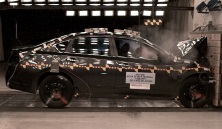
Frontal Crash Test
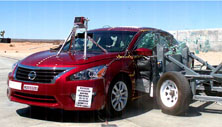
Side Crash Test
Overall Frontal Rating
Driver and Passenger Assessment
Driver Side
Passenger Side
Overall Side Rating
Side Barrier and Side Pole Tests
Driver Side
Passenger Side
Rollover Resistance
10.3% rollover risk in single-vehicle crash
Safety Features
ESC: StandardForward Collision Warning: OptionalLane Departure Warning: No
Recall Notices
NHTSANHTSA ID: 20V315000May 28, 2020
LATCHES/LOCKS/LINKAGES:HOOD:LATCH
Nissan North America, Inc. (Nissan) is recalling certain model year 2013-2018 Nissan Altima vehicles. If the primary hood latch is inadvertently released, there is an increased likelihood that the secondary hood latch may corrode over time.
Remedy Status
Nissan will notify owners, and dealers will install a stronger release spring in the hood release lever, a warning label near the secondary hood latch, and an Owners Manual addendum card with instructions on how to lubricate and maintain the secondary hood latch mechanism, free of charge. Owner notification letters were mailed June 30, 2021. Owners may contact Nissan customer service at 1-800-867-7669. Note: Recall 16V-029 remains open for any unremedied 2013-2015 Altimas and this recall applies to all vehicles covered by 16V-029 even if those repairs have already been performed.
NHTSA ID: 18V915000December 19, 2018
STRUCTURE:EMERGENCY:ESCAPE/EGRESS/EXIT
Nissan North America, Inc. (Nissan) is recalling certain 2015-2017 Altima vehicles, previously remedied under recall number 17V-040. The door latch-lock cable may not have been routed properly in the rear door when the remedy was applied. As a result, the cable may interfere with the window regulator causing the rear passenger door to unlatch and inadvertently open without warning when the window is lowered.
Remedy Status
Nissan will notify owners, and dealers will secure the latch-lock cables in the correct position using the new remedy procedure, free of charge. The recall began February 5, 2019. Owners may contact Nissan customer service at 1-800-647-7669.
NHTSA ID: 17V040000January 18, 2017
LATCHES/LOCKS/LINKAGES:DOORS:LATCH
Nissan North America, Inc. (Nissan) is recalling certain 2015-2017 Altima vehicles. The rear door latch/lock cable on the vehicles may have been improperly routed. As a result, lowering a rear window may inadvertently cause that door to unlatch and open.
Remedy Status
Nissan will notify owners, and dealers will correct the rear door latch/lock cable routing, free of charge. The recall began on February 16, 2017. Owners may contact Nissan customer service at 1-800-647-7261.
Owner Complaints
377 totalAIR BAGS
CRASH1 injuryApr 14, 2026
I was hit by a school bus on the interstate and my air bags didn't deploy. My car is throwing a code that all 4 did.
UNKNOWN OR OTHER
CRASHMar 6, 2026
I am submitting this complaint regarding a defective aftermarket Fuyao windshield installed by Safelite in my 2017 Nissan Altima. This windshield presents a serious safety hazard to drivers, passengers, and the public. Windshield Identification: [XXX] Solar Tint Hazard Descripti...
Preview excerpt
POWER TRAIN
Feb 9, 2026
The contact owns a 2017 Nissan Altima. The contact stated that while driving at an undisclosed speed, the accelerator pedal was depressed; however, the vehicle failed to accelerate as intended. The vehicle lost motive power. The vehicle was driven to the shoulder of the roadway. ...
Preview excerpt
LATCHES/LOCKS/LINKAGES
Feb 5, 2026
The contact owns a 2017 Nissan Altima. The contact received notification of NHTSA Campaign Number: 20V315000 (Latches/Locks/Linkages). The contact stated that while driving approximately 40 MPH, the hood unexpectedly opened and struck and cracked the windshield. Additionally, the...
Preview excerpt
AIR BAGS,SEATS,UNKNOWN OR OTHER
Feb 1, 2026
The passenger airbag system failed, specifically the occupant sensor and the pad beneath the passenger seat. These components are responsible for detecting whether a passenger is present and ensuring the airbag deploys correctly in a crash. I've also been told that I may be at ri...
Preview excerpt
POWER TRAIN
Nov 26, 2025
Just bought a 2017 Nissan Altima SR. Took it for a ride. Attempted to merge into traffic and the car had zero acceleration once I merged and then the transmission seemed to completely disengage. The RPMs week to around 3500 so I quickly had to pull off so as not to get rear en...
Preview excerpt
ENGINE
Nov 4, 2025
Check engine light came on will not go off transmission fluid burnt replaced transmission fluid because transmission was slipping out of gear not finding the correct gear I do believe it was starting off in second gear instead of first. Drive slightly better in manual after fluid...
Preview excerpt
LATCHES/LOCKS/LINKAGES
1 injuryOct 20, 2025
The contact owns a 2017 Nissan Altima. The contact stated that the vehicle was included in NHTSA Campaign Number: 20V315000 (Latches/Locks/Linnkages) for the hood latch and was taken to the dealer, who completed the remedy on June 3, 2025. After the remedy had been completed, whi...
Preview excerpt
POWER TRAIN,ENGINE
Oct 1, 2025
Check engine light came on at approximately 96,000 miles in which vehicle would have a delayed acceleration upon stepping on gas pedal or going up hills. Took it to 3 different mechanics including Nissan dealer and all confirmed a CVT failure and need a replacement. Nissan of Ame...
Preview excerpt
UNKNOWN OR OTHER,ENGINE
Sep 4, 2025
The 2017 Nissan Altima has a delay in acceleration when the gas pedal is pressed. I couldn't accelerate pass 35-40 mph when I was driving. Thankfully it was bumper to bumper traffic.
Showing 10 recent complaints from 377 total
View Full Complaint LogCompare Related Vehicles
Why Compare These Pages
The strongest comparison flow is usually: exact vehicle-year page, then nearby years of the same model, then other 2017 Nissan models. That sequence helps separate one-off year spikes from broader make-wide patterns.
More Nissan Altima Years
2018 Nissan AltimaCompare this year against 2017 for complaint and recall shifts.2r219c2016 Nissan AltimaCompare this year against 2017 for complaint and recall shifts.4r541c2019 Nissan AltimaCompare this year against 2017 for complaint and recall shifts.7r215c2015 Nissan AltimaCompare this year against 2017 for complaint and recall shifts.10r938c2020 Nissan AltimaCompare this year against 2017 for complaint and recall shifts.6r165c2014 Nissan AltimaCompare this year against 2017 for complaint and recall shifts.8r1,104c
More 2017 Nissan Models
2017 Nissan RogueAnother 2017 Nissan option for same-year comparison.5r579c2017 Nissan SentraAnother 2017 Nissan option for same-year comparison.3r224c2017 Nissan PathfinderAnother 2017 Nissan option for same-year comparison.2r183c2017 Nissan TitanAnother 2017 Nissan option for same-year comparison.3r181c2017 Nissan MuranoAnother 2017 Nissan option for same-year comparison.3r107c2017 Nissan MaximaAnother 2017 Nissan option for same-year comparison.4r99c
Frequently Asked Questions
How many recalls does the 2017 Nissan Altima have?
The 2017 Nissan Altima has 3 recalls recorded by NHTSA.
How many complaints have been filed for the 2017 Nissan Altima?
NHTSA has received 377 owner-reported complaints for the 2017 Nissan Altima.
What is the NHTSA safety rating for the 2017 Nissan Altima?
The 2017 Nissan Altima received an overall safety rating of 5 out of 5 stars from NHTSA.
What are the most common problems with the 2017 Nissan Altima?
The most commonly reported complaint categories for the 2017 Nissan Altima are power train (93 reports), air bags (57 reports), unknown or other (38 reports).
Does the 2017 Nissan Altima have any recalls?
Yes. NHTSA has 3 recalls on record for the 2017 Nissan Altima. Scroll up to review the published recall summaries, consequences, and remedies. To check for unrepaired recalls on your specific vehicle, use your VIN at nhtsa.gov/recalls.
Check Another Vehicle
Look up recalls and complaints for any year, make, and model.
This page summarizes publicly available data from the National Highway Traffic Safety Administration (NHTSA). Complaint counts reflect reports submitted to NHTSA by vehicle owners and do not by themselves prove defect severity or vehicle safety. Safety ratings may not be available for all vehicle-years. This site is not affiliated with NHTSA or any vehicle manufacturer. For official information, visit the official NHTSA page for this vehicle.