Honda · Civic Hybrid · 2013
2013 Honda Civic Hybrid
0
Recalls
8
Complaints
5/5
Safety Rating
The 2013 Honda Civic Hybrid has no recalls and 8 owner-reported complaints on file with NHTSA. Overall safety rating: 5 out of 5 stars. Most reported issue: engine (1 reports).
Source: NHTSA Public Records · Updated Apr 28, 2026
Research Context
The 2013 Honda Civic Hybrid page works best as a research starting point. Complaint totals show how much owner-reported activity exists, while recalls and investigations help show whether any of that activity turned into formal safety action.
Because this is a newer-era vehicle page, it usually helps to compare this year against nearby model years before deciding whether a complaint pattern looks isolated or persistent. On this page, the most prominent complaint area is engine with 1 reported complaint.
Best Research Moves
- Use the complaint log to understand what owners were actually reporting instead of relying only on the raw complaint total.
- Review the recall section even if the total is smaller, because a limited number of recalls can still point to meaningful safety actions.
- Check the linked investigations for extra ODI context if you want to see whether owner complaints escalated into formal defect review.
Key Takeaways
- The 2013 Honda Civic Hybrid currently shows no active NHTSA recalls listed on this page and 8 owner-reported complaints.
- This page currently shows 3 NHTSA investigations linked to this page.
- This page reflects complaint volume, recall history, and NHTSA test data, but it does not diagnose causes or rank reliability by itself.
- Safety data currently shows 5/5 overall NHTSA safety rating.
- The most frequently reported complaint categories on this page are engine (1), power train (1), electrical system (1).
- Vehicle
- 2013 Honda Civic Hybrid
- Recalls
- 0
- Complaints
- 8
- Safety Rating
- 5/5
How to Interpret This Page
This page combines three types of NHTSA data: recall campaigns (official manufacturer or government actions), owner complaints (unverified consumer reports), and crash test ratings (where available). A vehicle with many complaints is not necessarily less reliable — complaint volume correlates with sales volume and vehicle age. Recalls indicate identified defects, not overall quality. To compare this model year with others, use the year navigation in the sidebar or return to the model overview page.
If you are researching a used vehicle, start with the complaint categories, compare them against the recall list, and then check nearby model years to see whether the same issue profile repeats. That usually produces a better buying or research signal than treating the raw complaint total as a standalone safety ranking.
NHTSA Crash Test Performance
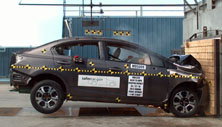
Frontal Crash Test
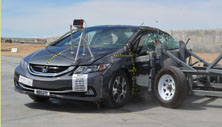
Side Crash Test
Overall Frontal Rating
Driver and Passenger Assessment
Driver Side
Passenger Side
Overall Side Rating
Side Barrier and Side Pole Tests
Driver Side
Passenger Side
Rollover Resistance
10.5% rollover risk in single-vehicle crash
Safety Features
ESC: StandardForward Collision Warning: OptionalLane Departure Warning: Optional
Investigations
3 totalDPClosed
NHTSA received a petition on or about July 18, 2022, requesting that Federal Motor Vehicle Safety Standard (FMVSS) 141 be applied to all electric and hybrid vehicles operating in the United States. The petition can be reviewed at NHTSA.gov under ODI Number 11486072. FMVSS 141 establishes performance requirements for pedestrian alert sounds for motor vehicles. The standard applies to hybrid and electric vehicles that have a gross vehicle weight rating of 4,536 KG or less or are defined as low-speed vehicles. The standard became fully applicable to all such vehicles manufactured on or after March 1, 2021.On January 27, 2023, NHTSA opened Defect Petition (DP) 22-005 to evaluate the subject matter described in the petition. On June 24, 2023 and as supplemented on June 25, 2023, the petitioner notified NHTSA he was withdrawing his petition. The petitioner indicated that, based on his review of data, there is no justification for asserting potential benefits that could be derived from actions sought by my petition. Based on the petitioner's withdrawal, DP22-005 is closed. Closure of this DP does not represent a determination by NHTSA regarding the subject matter of the petition.
Component: ELECTRICAL SYSTEM:PROPULSION SYSTEMOpened: Jan 27, 2023Closed: Aug 7, 2023Related recall: 22V063000
From 2000 through 2017, Takata produced millions of air bag inflators using two types of phase-stabilized ammonium nitrate ("PSAN") propellant -- propellant 2004 and propellant 2004L. After prolonged exposure to high temperature cycles and humidity, inflators using propellant 2004 can degrade, causing the propellant to burn too quickly when ignited. The rapid burning can cause the inflator to rupture during deployment, potentially causing serious or even fatal injury to vehicle occupants. See 2016 Blomquist Report at www.nhtsa.gov/sites/nhtsa.gov/files/documents/expert_report-hrblomquist.pdf.Consequently, all frontal inflators using propellant 2004 that do not contain a "desiccant" (a substance that traps and holds moisture) in US vehicles are under recall. These "non-desiccated" inflators either have been or are required to be replaced.In some cases, the remedy part for these recalled inflators was, or will be, an inflator using either propellant 2004 or 2004L that does contain a desiccant. None of these "desiccated" remedy parts (which were installed in older model year vehicles) are currently under recall for a degradation concern. Certain subsets of desiccated PSAN inflators using propellant 2004 for use as original equipment, however, have been recalled for a degradation concern. All Takata inflators produced with propellant 2004L contain desiccant, and none of these desiccated inflators using propellant 2004L are under recall for a degradation concern. There have been no reported field ruptures in any non-recalled desiccated PSAN inflators.It is understood that desiccants fully saturate at some threshold, at which point any additional moisture will not be captured. This means the degradation process observed in non-desiccated inflators using propellant 2004 may also occur in non-recalled desiccated inflators using propellant 2004, assuming additional moisture enters the inflator and high temperature cycling occurs. Based on available information, desiccant saturation can occur within the first five years in the worst environments, and the time required for full saturation is affected by multiple factors. While no present safety risk has been identified, further work is needed to evaluate the future risk of non-recalled desiccated inflators using propellant 2004.Three entities -- Takata (now known as TK Global), the Independent Testing Coalition, and Exponent -- have been studying the long-term behavior of Takata desiccated PSAN inflators using propellant 2004L (as well as 2004) in the presence of moisture and temperature cycling. The research efforts, which include development of predictive modeling techniques and field sample analysis, are ongoing. To date, none of the researchers have identified field evidence showing that propellant 2004L is undergoing a degradation process that leads to aggressive deployment and potential rupture. However, the time in service of such inflators remains short compared to that of the inflators using propellant 2004. Further study is needed to assess the long-term safety of desiccated inflators using propellant 2004L.The Office of Defects Investigation is opening this investigation to examine whether a safety defect related to propellant degradation exists in non-recalled desiccated PSAN frontal inflators manufactured by Takata. This investigation will require extensive information on Takata production processes and surveys of inflators in the field. Lists of recall actions that may have used desiccated PSAN inflators as remedy parts, as well as the makes and models originally manufactured with them, is available with the downloadable version of this document (see nhtsa.gov/recalls?nhtsaId=EA21002 -- note this information is subject to change/revision as the investigation proceeds). This investigation does not supersede EA15-001, which remains open.
Component: AIR BAGS:FRONTAL:DRIVER SIDE:INFLATOR MODULEOpened: Sep 17, 2021
EAClosed
The Office of Defects Investigation (ODI) opened this investigation to determine if the failure of airbags to deploy during severe crashes, in certain vehicles, was the result of a safety related defect. During the investigation a complex failure was studied that can result in non-deployment of subject vehicle air bags and other restraint system devices in severe crash events. The subject vehicles may be equipped with an airbag control unit (ACU) for the supplemental restraint system (SRS) Electronic Control Unit (ECU) manufactured by ZF-TRW. The ECU receives signals from crash sensors mounted in the vehicle and deploys the vehicle air bags and seat belt pretensioners in accordance with manufacturer design specifications. The ECU in the subject vehicles contains a model DS84 application-specific integrated circuit (ASIC) which controls the communication of the crash sensor signal, firing commands (i.e., when to deploy the airbag(s) and/or pretensioners), and fault information (e.g., diagnostic trouble codes). In September 2016, FCA announced recall 16V-668 for certain model year (MY) 2010 to 2014 Chrysler, Dodge and Jeep products manufactured with the subject ZF-TRW ACU. In this recall, FCA discussed an EOS condition that resulted in a failure of the subject DS84 ASIC, which caused air bag non-deployment. FCA noted that the defect condition had only been observed in vehicles equipped with sensor harnessing routed across the front of the vehicle. Other FCA vehicles that also used the subject ACU, but were not equipped with cross-car harnessing, had not experienced EOS failures, despite similar time in service. During the course of this investigation, ODI sent two separate Information Request (IR) letters to six vehicle manufactures (including FCA, Hyundai, Honda, Kia, Mitsubishi, and Toyota) and one IR letter to ZF-TRW. These IR letters resulted in ODI receiving comprehensive data from these manufacturers and suppliers. Studies of this data found that the DS84 ASIC does not have sufficient protection against negative electrical transients or electrical overstress (“EOS”) that can be generated in certain severe crashes. An electrical transient occurs when the electrical power supplied to a circuit changes momentarily over a short duration of time. In these severe crash cases, the crash sensors and other powered wiring can be damaged and short circuited so as to create a negative electrical transient of sufficient intensity and duration (that are outside the vehicle manufacturer's specification) to damage the ASIC before the restraint device deployment signal is received by the SRS ECU. This damaged signal can lead to incomplete or nondeployment of the air bags and/or pretensioners. Airbag non-deployment and/or lack of pretensioner operation can increase the risk or severity of injury in a crash.A total of 8 fatalities and 14 injuries were associated with known EOS events. The common element in all investigated manufacturers vehicles is the SRS ECU containing a DS84 ASIC manufactured by ZF-TRW. The risk associated with the ASIC is equally shared among all OEMS involved in the investigation. The actual real-world risk can be mitigated by other factors which were assessed by ODI during this investigation. The first mitigating factor involves protections built into the ACU design which protect the DS84 ASIC from damage. There are multiple strategies and levels of protection employed by different OEMs that provide effective EOS mitigation. The two most common strategies at the ACU level are circuit protection diodes on the remote senor signal lines, and current limiting resistors that protect critical components. The second mitigating factor is found at the vehicle level and involves the location and routing of the wires leading from the crash sensors to the SRS ECU. If the wires are well protected in a crash and are not routed with other power wires carrying large currents, the risk for an EOS event is significantly reduced or eliminated. These design specific factors combine to produce a spectrum of risk for the vehicles equipped with ACUs using the DS84 ASIC. Given the many of years of field exposure, it is possible to divide the subject population into two groups; vehicles which have experienced EOS events, and vehicles which have not experienced EOS field events. Four of the six OEMs involved in this investigation have experienced EOS field events on at least one of their models equipped with a DS84 ASIC. All vehicle models (including the Toyota models identified in the Failure Report Summary of the opening resume for this investigation) with field events have been recalled. In an abundance of caution, ODI kept this investigation open five years to monitor field performance and did not identify any field events on vehicles not included in existing safety recalls. Given the spectrum of risk identified in this investigation and that all vehicles with a demonstrated unreasonable risk have been recalled, ODI is closing this investigation. ODI is closing this investigation with the following manufacturer safety recalls: 16V-668, 18E-043, 18V-137, 18V-363, and 20V-024. With the recall actions taken by the subject vehicle and equipment manufacturers, this investigation is closed. The closing of this investigation does not constitute a finding by NHTSA that a safety-related defect does not exists on other model or model year vehicles outside of the recall scopes. The agency reserves the right to take further action if warranted by the circumstances.
Component: AIR BAGS: AIR BAG/RESTRAINT CONTROL MODULEOpened: Apr 19, 2019Closed: Sep 19, 2024Related recall: 20V024
Owner Complaints
8 totalPOWER TRAIN
Jul 7, 2023
The contact owns a 2013 Honda Civic Hybrid. The contact stated that while driving at an undisclosed speed and attempting to accelerate, the vehicle vibrated violently. No warning lights were illuminated. The vehicle was taken to the dealer, who diagnosed a failure with the contin...
Preview excerpt
SERVICE BRAKES
Nov 10, 2017
ON THE MORNING OF NOVEMBER 10, 2017, THE "CHECK BREAKS" LIGHT LIT UP WHILE I WAS DRIVING, THEN THE BREAKS SUDDENLY STOPPED WORKING. FORTUNATELY I WAS DRIVING IN SLOW CITY TRAFFIC, SO I WASN'T MOVING VERY FAST, BUT IN ORDER TO STOP, I HAD TO APPLY THE PARKING BREAK BECAUSE THE CAR...
Preview excerpt
ELECTRICAL SYSTEM,ENGINE
Oct 10, 2017
I TOOK MY 2013 CIVIC TO HONDA YESTERDAY TO GET A CAR KEY PROGRAMMED, AND NOW MY CAR WILL NOT RUN. IT VIBRATES REAL LOUD, AND THE ODOMETER WILL NOT GO TO 2. I HAVE TO NOW GET IT TOWED BACK TO HONDA ON 10/30/17 AND LET THEM FIX IT, AND I WILL NOT PAY A DIME. THEY DID SOMETHI...
Preview excerpt
STEERING,SUSPENSION,UNKNOWN OR OTHER
Dec 11, 2015
UNDOCUMENTED VEHICLE MAINTENANCE THAT MAY DEGRADE SAFETY FEATURE. PURCHASED VEHICLE BECAUSE IT INCLUDED FCW (FORWARD COLLISION WARNING) AND LDW (LANE DEPARTURE WARNING) SAFETY FEATURES. HAVE LEARNED THAT AS PART OF A FOUR-WHEEL ALIGNMENT, CALIBRATION OF THESE SYSTEMS IS REQUIRE...
Preview excerpt
AIR BAGS
Feb 19, 2015
I RECEIVED NHTSA RECALL 14V-349 JJ7 AND WAS TOLD BY THE DEALERSHIP THAT ONLY ONE OF THE TWO AFFECTED AIRBAGS WAS AVAILABLE. THEY SAID HONDA IS PROJECTING THE OTHER TO BE AVAILABLE IN APRIL, 1-2 MONTHS FROM THE DATE OF THE NOTICE. THE NOTICE SAYS TO TAKE CARE OF THIS IMMEDIATELY...
Preview excerpt
ENGINE
Feb 16, 2015
TL* THE CONTACT OWNS A 2013 HONDA CIVIC HYBRID. WHILE DRIVING APPROXIMATELY 65 MPH, THE VEHICLE DOWNSHIFTED TO 15 MPH INDEPENDENTLY WHILE MAKING A JERKING MOTION. ALSO, THE CHECK ENGINE WARNING LIGHT ILLUMINATED. THE VEHICLE WAS TOWED TO A DEALER FOR DIAGNOSTIC TESTING, WHICH IND...
Preview excerpt
WHEELS
Jul 20, 2014
THIS SAFETY COMPLAINT IS NOT ABOUT THE VEHICLE, IT IS ABOUT THE GOODYEAR TIRES I INSTALLED. I HAVE GOODYEAR ASSURANCE TIRES FOR SUMMER DRIVING AND USE THE OEM TIRES FOR WINTER DRIVING. I WAS DRIVING HOME YESTERDAY AND THE LEFT REAR TIRE SUDDENLY WENT DOWN AND THE TPMS WARNING ...
Preview excerpt
ELECTRICAL SYSTEM
Oct 5, 2013
6659 MILES INTO OWNING THIS CAR HONDA PASADENA CHARGED ME $220 TO REPLACE ENGINE WIRING THAT HAD BEEN EATEN BY RODENTS. THIS CAR WAS PARKED IN THE SAME PLACE AS AT LEAST 3 OTHER TYPES OF CARS OVER A 13 YEAR PERIOD AND NONE OF THE OTHERS HAD THIS ISSUE. I BELIEVE THAT HONDA PASA...
Preview excerpt
Showing 8 recent complaints from 8 total
View Full Complaint LogCompare Related Vehicles
Why Compare These Pages
The strongest comparison flow is usually: exact vehicle-year page, then nearby years of the same model, then other 2013 Honda models. That sequence helps separate one-off year spikes from broader make-wide patterns.
More Honda Civic Hybrid Years
2014 Honda Civic HybridCompare this year against 2013 for complaint and recall shifts.3i5c2012 Honda Civic HybridCompare this year against 2013 for complaint and recall shifts.1r2i12c2015 Honda Civic HybridCompare this year against 2013 for complaint and recall shifts.3i5c2011 Honda Civic HybridCompare this year against 2013 for complaint and recall shifts.6r1i1c2010 Honda Civic HybridCompare this year against 2013 for complaint and recall shifts.6r1i12c2009 Honda Civic HybridCompare this year against 2013 for complaint and recall shifts.5r1i28c
More 2013 Honda Models
2013 Honda AccordAnother 2013 Honda option for same-year comparison.5r5i1,407c2013 Honda CR-VAnother 2013 Honda option for same-year comparison.2r2i379c2013 Honda CivicAnother 2013 Honda option for same-year comparison.2i312c2013 Honda PilotAnother 2013 Honda option for same-year comparison.6r265c2013 Honda OdysseyAnother 2013 Honda option for same-year comparison.6r209c2013 Honda FitAnother 2013 Honda option for same-year comparison.10r1i173c
Frequently Asked Questions
How many recalls does the 2013 Honda Civic Hybrid have?
The 2013 Honda Civic Hybrid has 0 recalls recorded by NHTSA.
How many complaints have been filed for the 2013 Honda Civic Hybrid?
NHTSA has received 8 owner-reported complaints for the 2013 Honda Civic Hybrid.
What is the NHTSA safety rating for the 2013 Honda Civic Hybrid?
The 2013 Honda Civic Hybrid received an overall safety rating of 5 out of 5 stars from NHTSA.
What are the most common problems with the 2013 Honda Civic Hybrid?
The most commonly reported complaint categories for the 2013 Honda Civic Hybrid are engine (1 reports), power train (1 reports), electrical system (1 reports).
Does the 2013 Honda Civic Hybrid have any recalls?
NHTSA does not currently list any recalls on record for the 2013 Honda Civic Hybrid. To verify the status of your specific vehicle, check nhtsa.gov/recalls with your VIN.
Check Another Vehicle
Look up recalls and complaints for any year, make, and model.
This page summarizes publicly available data from the National Highway Traffic Safety Administration (NHTSA). Complaint counts reflect reports submitted to NHTSA by vehicle owners and do not by themselves prove defect severity or vehicle safety. Safety ratings may not be available for all vehicle-years. This site is not affiliated with NHTSA or any vehicle manufacturer. For official information, visit the official NHTSA page for this vehicle.