Hyundai · Sonata · 2014
2014 Hyundai Sonata
7
Recalls
735
Complaints
5/5
Safety Rating
The 2014 Hyundai Sonata has 7 recalls and 735 owner-reported complaints on file with NHTSA. Overall safety rating: 5 out of 5 stars. Most reported issue: engine (181 reports).
Source: NHTSA Public Records · Updated Apr 28, 2026
Research Context
The 2014 Hyundai Sonata page works best as a research starting point. Complaint totals show how much owner-reported activity exists, while recalls and investigations help show whether any of that activity turned into formal safety action.
Because this is a newer-era vehicle page, it usually helps to compare this year against nearby model years before deciding whether a complaint pattern looks isolated or persistent. On this page, the most prominent complaint area is engine with 181 reported complaints.
Best Research Moves
- Use the complaint log to see whether the 2014 Hyundai Sonata reports cluster around one repeated symptom or spread across multiple systems.
- Compare the recall list with the complaint mix to see whether the most reported issues overlap with formal NHTSA safety campaigns.
- This page is primarily a complaints-and-recalls research surface, so compare nearby model years before treating the complaint total as a standalone verdict.
Key Takeaways
- The 2014 Hyundai Sonata currently shows 7 NHTSA recalls listed on this page and 735 owner-reported complaints.
- This page currently shows no linked NHTSA investigations.
- This page reflects complaint volume, recall history, and NHTSA test data, but it does not diagnose causes or rank reliability by itself.
- Safety data currently shows 5/5 overall NHTSA safety rating.
- The most frequently reported complaint categories on this page are engine (181), exterior lighting (58), steering (34).
- Vehicle
- 2014 Hyundai Sonata
- Recalls
- 7
- Complaints
- 735
- Safety Rating
- 5/5
How to Interpret This Page
This page combines three types of NHTSA data: recall campaigns (official manufacturer or government actions), owner complaints (unverified consumer reports), and crash test ratings (where available). A vehicle with many complaints is not necessarily less reliable — complaint volume correlates with sales volume and vehicle age. Recalls indicate identified defects, not overall quality. To compare this model year with others, use the year navigation in the sidebar or return to the model overview page.
If you are researching a used vehicle, start with the complaint categories, compare them against the recall list, and then check nearby model years to see whether the same issue profile repeats. That usually produces a better buying or research signal than treating the raw complaint total as a standalone safety ranking.
NHTSA Crash Test Performance
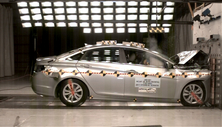
Frontal Crash Test
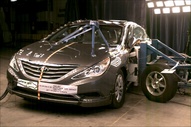
Side Crash Test
Overall Frontal Rating
Driver and Passenger Assessment
Driver Side
Passenger Side
Overall Side Rating
Side Barrier and Side Pole Tests
Driver Side
Passenger Side
Rollover Resistance
9.7% rollover risk in single-vehicle crash
Safety Features
ESC: StandardForward Collision Warning: NoLane Departure Warning: No
Recall Notices
NHTSANHTSA ID: 22V312000May 06, 2022
FUEL SYSTEM, GASOLINE:DELIVERY:HOSES, LINES/PIPING, AND FITTINGS
Hyundai Motor America (Hyundai) is recalling certain 2013-2014 Sonata vehicles. The low pressure fuel hose that connects the low pressure fuel pump to the direct injection fuel pump may crack over time, due to heat generated within the engine compartment.
Remedy Status
Dealers will replace the low pressure fuel hose, free of charge. Owner notification letters were mailed October 10, 2022. Owners may contact Hyundai customer service at 1-855-371-9460. Hyundai's number for this recall is 227. This recall replaces NHTSA recall number 20V-121. Vehicles previously repaired under recall 20V-121 that did not receive a replacement fuel hose will need to have this new recall remedy performed.
NHTSA ID: 20V121000February 28, 2020
FUEL SYSTEM, GASOLINE:DELIVERY:HOSES, LINES/PIPING, AND FITTINGS
Hyundai Motor America (Hyundai) is recalling certain 2013-2014 Sonata vehicles. The low pressure fuel hose that connects the low pressure fuel pump to the direct injection fuel pump may crack over time due to heat generated within the engine compartment.
Remedy Status
Hyundai will notify owners, and dealers will inspect the low-pressure fuel hose for damage or leaking, replacing it as necessary. If no damage or leaking is found, heat-protective tape will be installed. Repairs will be performed free of charge. The recall began August 10, 2020. Owners may contact Hyundai customer service at 1-855-371-9460. Hyundai's number for this recall is 189. This recall has been replaced by NHTSA recall number 22V-314.
NHTSA ID: 18V934000December 28, 2018
ENGINE
Hyundai Motor America (Hyundai) is recalling certain 2011-2014 Sonata and 2013-2014 Santa Fe Sport vehicles previously repaired under recall numbers 15V-568 and 17V-226. The high pressure fuel pipe that connects to the fuel pump outlet may have been damaged, misaligned, or improperly torqued during the engine replacement procedure, allowing fuel to leak from the pipe.
Remedy Status
Hyundai will notify owners, and dealers will inspect and replace the fuel pipe, as necessary, free of charge. The recall began March 1, 2019. Owners may contact Hyundai customer service at 1-855-371-9460. Hyundai's recall number for this recall is 180.
NHTSA ID: 17V617000October 04, 2017
SEAT BELTS:PRETENSIONER
Hyundai Motor America (Hyundai) is recalling certain 2011-2014 Sonata and 2011-2015 Sonata Hybrid vehicles previously repaired under recall campaign 17V-152. The seat belt linkages for both front seat belts may detach from the seat belt anchor pretensioners.
Remedy Status
Hyundai will notify owners, and dealers will again verify the connection between the seat belt linkage and the pretensioner and additionally install a warning label to prevent future seat belt linkage detachment, free of charge. The recall began November 6, 2017. Owners may contact Hyundai customer service at 1-855-371-9460. Hyundai's number for this recall is 169.
NHTSA ID: 17V226000March 31, 2017
ENGINE AND ENGINE COOLING:ENGINE
Hyundai Motor America (Hyundai) is recalling certain 2013-2014 Sonata and Santa Fe Sport vehicles. Machining errors during the engine manufacturing process may cause premature bearing wear within the engine.
Remedy Status
Hyundai will notify owners, and dealers will inspect the engine, replacing the engine short block, as necessary, free of charge. The recall began June 2017. Owners may contact Hyundai customer service at 1-800-633-5151. Hyundai's number for this recall is 162.
NHTSA ID: 17V152000March 08, 2017
SEAT BELTS:FRONT:ANCHORAGE
Hyundai Motor America (Hyundai) is recalling certain 2011-2014 Sonata and 2011-2015 Sonata Hybrid vehicles. In the affected vehicles, the seat belt linkages for both front seat belts may detach from the seat belt anchor pretensioners.
Remedy Status
Hyundai will notify owners and dealers will inspect the connection between the seat belt linkages and the seat belt anchor pretensioners, repairing them as necessary, free of charge. The recall is expected to begin April 7, 2017. Owner's may contact Hyundai customer service at 1-855-371-9460. Hyundai's number for the recall is 160.
NHTSA ID: 14V434000July 18, 2014
POWER TRAIN:AUTOMATIC TRANSMISSION
Hyundai Motor Company (Hyundai) is recalling certain model year 2011-2014 Sonata vehicles manufactured December 11, 2009, through May 29, 2014. In the affected vehicles, the transmission shift cable may detach from from the shift lever pin.
Remedy Status
Hyundai will notify owners, and dealers will inspect and, as necessary, repair the connection between the shift cable and shift lever, free of charge. The recall began in September 2014. Owners may contact Hyundai customer service at 1-800-633-5151. Hyundai's number for this recall is 123.
Owner Complaints
735 totalSTEERING
Apr 1, 2026
The contact owns a 2014 Hyundai Sonata. The contact stated that while driving at an undisclosed speed, the steering wheel became inoperable. There was no warning light illuminated. The contact stated that after driving over a pothole, the steering wheel became difficult to handle...
Preview excerpt
FUEL SYSTEM, GASOLINE
FIREMar 1, 2026
The contact owns a 2014 Hyundai Sonata. The contact stated that after parking the vehicle and leaving it unoccupied, the contact's daughter, who was seated on a porch, called the contact informing her there was grey/blue smoke emitting from the vehicle. The smoke increased, and f...
Preview excerpt
ENGINE
Feb 6, 2026
I had gotten an engine back in 2021 because of a recall, and now the newer engine is burning all my oil up.
ELECTRICAL SYSTEM
Jan 20, 2026
Odometer Fraud. The contact owns a 2014 Hyundai Sonata. The contact purchased the vehicle on April 28, 2025, with 28,974 miles from a dealer. On January 20, 2026, while attempting to start the vehicle after being parked for a while, the vehicle lost power and failed to start. The...
Preview excerpt
UNKNOWN OR OTHER,ENGINE,FUEL/PROPULSION SYSTEM
Jan 16, 2026
I had recall 162 - engine replacement completed in 2024 , now I have fuel leak at high pressure fuel pump, the pump that is a component of the engine has now failed which was installed during the engine replacement which can cause a major fire
SERVICE BRAKES
Jan 2, 2026
My vehicle, a 2014 Hyundai Sonata Turbo, is having brake lock-up issues. It seems to be related to the AVS (Automatic Brake System). This happens mostly when the vehicle is parked on a hill and the brakes lock up when I start moving. This has been happening for several months, bu...
Preview excerpt
POWER TRAIN,ELECTRICAL SYSTEM,ENGINE
Jan 2, 2026
While driving with my family on a busy freeway at approximately 70 mph, our vehicle suddenly displayed a loud, urgent warning: “Hybrid System Warning – Safely Stop and Do Not Drive!” At the same moment, the car lost the ability to accelerate without any prior signs of trouble. We...
Preview excerpt
UNKNOWN OR OTHER
FIREDec 29, 2025
I was driving my 2014 Hyundai Sonata in a rural area when smoke suddenly entered the cabin from the engine compartment. Two bystanders waved me down, alerting me that they could see fire underneath the engine compartment. I immediately stopped the vehicle, turned it off, and exit...
Preview excerpt
FUEL/PROPULSION SYSTEM
Dec 15, 2025
Fuel line under the hood was spewing gas after starting the vehicle. My safety was put at risk by being stranded in a dangerous part of town for 5 days before getting the car towed back home No inspections have been done by those companies No warning light where on.
AIR BAGS
Dec 7, 2025
The contact owns a 2014 Hyundai Sonata. The contact stated that while driving at an undisclosed speed, there was an abnormal sound coming from the vehicle before the front passenger's side air bag independently deployed. The vehicle was not diagnosed or repaired by an independent...
Preview excerpt
Showing 10 recent complaints from 735 total
View Full Complaint LogCompare Related Vehicles
Why Compare These Pages
The strongest comparison flow is usually: exact vehicle-year page, then nearby years of the same model, then other 2014 Hyundai models. That sequence helps separate one-off year spikes from broader make-wide patterns.
More Hyundai Sonata Years
2015 Hyundai SonataCompare this year against 2014 for complaint and recall shifts.9r1,105c2013 Hyundai SonataCompare this year against 2014 for complaint and recall shifts.9r1,875c2016 Hyundai SonataCompare this year against 2014 for complaint and recall shifts.6r706c2012 Hyundai SonataCompare this year against 2014 for complaint and recall shifts.8r1,545c2017 Hyundai SonataCompare this year against 2014 for complaint and recall shifts.3r743c2011 Hyundai SonataCompare this year against 2014 for complaint and recall shifts.14r3,360c
More 2014 Hyundai Models
2014 Hyundai Santa FeAnother 2014 Hyundai option for same-year comparison.3r489c2014 Hyundai ElantraAnother 2014 Hyundai option for same-year comparison.2r377c2014 Hyundai TucsonAnother 2014 Hyundai option for same-year comparison.2r200c2014 Hyundai VelosterAnother 2014 Hyundai option for same-year comparison.2r82c2014 Hyundai AccentAnother 2014 Hyundai option for same-year comparison.1r78c2014 Hyundai AzeraAnother 2014 Hyundai option for same-year comparison.1r47c
Frequently Asked Questions
How many recalls does the 2014 Hyundai Sonata have?
The 2014 Hyundai Sonata has 7 recalls recorded by NHTSA.
How many complaints have been filed for the 2014 Hyundai Sonata?
NHTSA has received 735 owner-reported complaints for the 2014 Hyundai Sonata.
What is the NHTSA safety rating for the 2014 Hyundai Sonata?
The 2014 Hyundai Sonata received an overall safety rating of 5 out of 5 stars from NHTSA.
What are the most common problems with the 2014 Hyundai Sonata?
The most commonly reported complaint categories for the 2014 Hyundai Sonata are engine (181 reports), exterior lighting (58 reports), steering (34 reports).
Does the 2014 Hyundai Sonata have any recalls?
Yes. NHTSA has 7 recalls on record for the 2014 Hyundai Sonata. Scroll up to review the published recall summaries, consequences, and remedies. To check for unrepaired recalls on your specific vehicle, use your VIN at nhtsa.gov/recalls.
Check Another Vehicle
Look up recalls and complaints for any year, make, and model.
This page summarizes publicly available data from the National Highway Traffic Safety Administration (NHTSA). Complaint counts reflect reports submitted to NHTSA by vehicle owners and do not by themselves prove defect severity or vehicle safety. Safety ratings may not be available for all vehicle-years. This site is not affiliated with NHTSA or any vehicle manufacturer. For official information, visit the official NHTSA page for this vehicle.