Toyota · Corolla · 2011
2011 Toyota Corolla
9
Recalls
589
Complaints
3/5
Safety Rating
The 2011 Toyota Corolla has 9 recalls and 589 owner-reported complaints on file with NHTSA. Overall safety rating: 3 out of 5 stars. Most reported issue: air bags (396 reports).
Source: NHTSA Public Records · Updated May 4, 2026
Research Context
The 2011 Toyota Corolla page works best as a research starting point. Complaint totals show how much owner-reported activity exists, while recalls and investigations help show whether any of that activity turned into formal safety action.
Because this is a newer-era vehicle page, it usually helps to compare this year against nearby model years before deciding whether a complaint pattern looks isolated or persistent. On this page, the most prominent complaint area is air bags with 396 reported complaints.
Best Research Moves
- Use the complaint log to see whether the 2011 Toyota Corolla reports cluster around one repeated symptom or spread across multiple systems.
- Compare the recall list with the complaint mix to see whether the most reported issues overlap with formal NHTSA safety campaigns.
- Check the linked investigations for extra ODI context if you want to see whether owner complaints escalated into formal defect review.
Key Takeaways
- The 2011 Toyota Corolla currently shows 9 NHTSA recalls listed on this page and 589 owner-reported complaints.
- This page currently shows 2 NHTSA investigations linked to this page.
- This page reflects complaint volume, recall history, and NHTSA test data, but it does not diagnose causes or rank reliability by itself.
- Safety data currently shows 3/5 overall NHTSA safety rating.
- The most frequently reported complaint categories on this page are air bags (396), steering (31), vehicle speed control (20).
- Vehicle
- 2011 Toyota Corolla
- Recalls
- 9
- Complaints
- 589
- Safety Rating
- 3/5
How to Interpret This Page
This page combines three types of NHTSA data: recall campaigns (official manufacturer or government actions), owner complaints (unverified consumer reports), and crash test ratings (where available). A vehicle with many complaints is not necessarily less reliable — complaint volume correlates with sales volume and vehicle age. Recalls indicate identified defects, not overall quality. To compare this model year with others, use the year navigation in the sidebar or return to the model overview page.
If you are researching a used vehicle, start with the complaint categories, compare them against the recall list, and then check nearby model years to see whether the same issue profile repeats. That usually produces a better buying or research signal than treating the raw complaint total as a standalone safety ranking.
NHTSA Crash Test Performance
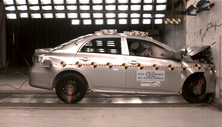
Frontal Crash Test
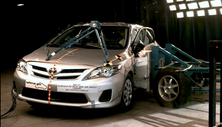
Side Crash Test
Overall Frontal Rating
Driver and Passenger Assessment
Driver Side
Passenger Side
Overall Side Rating
Side Barrier and Side Pole Tests
Driver Side
Passenger Side
Rollover Resistance
12.1% rollover risk in single-vehicle crash
Safety Features
ESC: StandardForward Collision Warning: NoLane Departure Warning: No
Recall Notices
NHTSANHTSA ID: 20V024000January 17, 2020
AIR BAGS: AIR BAG/RESTRAINT CONTROL MODULE
Toyota Motor Engineering & Manufacturing (Toyota) is recalling certain 2011-2019 Corolla, 2011-2013 Matrix, 2012-2018 Avalon, and 2013-2018 Avalon Hybrid vehicles. During certain crashes, the air bag electronic control unit (ECU) may malfunction, possibly disabling the deployment of the air bags and/or seat belt pretensioners.
Remedy Status
Toyota will notify owners, and dealers will inspect the ECU and install a noise filter between the air bag control module and its wire harness, as necessary, free of charge. Owners were notified of the safety risk beginning March 2, 2020. A second letter notifying owners of the remedy repair will be mailed between March 16, 2020 and June 27, 2020. Owners may contact Toyota customer service at 1-888-270-9371. Toyota's numbers for this recall are 20TB03, 20TA03 and 20TA05.
NHTSA ID: 19V741000October 17, 2019
AIR BAGS:FRONTAL:PASSENGER SIDE:INFLATOR MODULE
Toyota Motor Engineering & Manufacturing (Toyota) is recalling certain 2010-2016 4Runner, 2003-2006 Tundra, 2003-2013 Corolla, 2009-2010 Corolla Matrix, 2004-2005 RAV4, 2002-2007 Sequoia, 2011-2013 Sienna, 2008-2012 Scion xB, 2008-2009 Lexus IS-F, 2007-2012 Yaris and Lexus ES350, 2010-2017 Lexus GX460, 2002-2010 Lexus SC430, 2006-2012 Lexus IS250 and IS350 and 2010-2015 Lexus IS250C and IS350C vehicles. These vehicles had their driver or passenger frontal air bag inflators previously replaced under a prior recall using inflators of the same design. The inflators may explode due to propellant degradation occurring after long-term exposure to high absolute humidity, temperature and temperature cycling.
Remedy Status
Toyota will notify owners. Depending on the vehicle model, dealers will replace the front driver inflator, front passenger airbag inflator, the airbag assembly, or the front passenger airbag sub-assembly and inflator. The recall began November 20, 2019. Owners may contact Toyota customer service at 1-888-270-9371 or Lexus customer service at 1-800-255-3987. Toyota's numbers for this recall are J0A, J0B, and J0C. Lexus' numbers for this recall are JLI, JLJ, and JLK.
NHTSA ID: 19V005000January 09, 2019
AIR BAGS:FRONTAL:PASSENGER SIDE:INFLATOR MODULE
Toyota Motor Engineering & Manufacturing (Toyota) is recalling certain 2014-2016 Toyota 4Runner, 2014-2015 Scion xB, Lexus IS350C, IS250C, 2014 Toyota Sienna, Lexus IS-F, and 2014-2017 Lexus GX460 vehicles sold, or ever registered in the states of Alabama, California, Florida, Georgia, Hawaii, Louisiana, Mississippi, South Carolina, Texas, Puerto Rico, American Samoa, Guam, the Northern Mariana Islands (Saipan), and the U.S. Virgin Islands or "Zone A." Toyota is also recalling certain 2011-2013 Toyota Corolla, Corolla Matrix, Lexus IS250, IS350, 2011-2016 4Runner, 2011-2015 Scion xB, Lexus IS350C, IS250C, 2011-2014 Toyota Sienna, Lexus IS-F, 2011-2017 Lexus GX460, and 2011-2012 Lexus ES350 vehicles ever registered in the states of Arizona, Arkansas, Delaware, District of Columbia, Illinois, Indiana, Kansas, Kentucky, Maryland, Missouri, Nebraska, Nevada, New Jersey, New Mexico, North Carolina, Ohio, Oklahoma, Pennsylvania, Tennessee, Virginia, and West Virginia or "Zone B." Toyota is also recalling certain 2010-2013 Toyota Corolla, Corolla Matrix, Lexus IS350, 2010-2016 4Runner, 2010-2013 Lexus IS250, 2010-2015 Scion xB, Lexus IS350C, IS250C, 2010-2017 Lexus GX460, 2010-2014 Lexus IS-F, and 2010-2012 Lexus ES350 vehicles ever registered in the states of Alaska, Colorado, Connecticut, Idaho, Iowa, Maine, Massachusetts, Michigan, Minnesota, Montana, New Hampshire, New York, North Dakota, Oregon, Rhode Island, South Dakota, Utah, Vermont, Washington, Wisconsin, and Wyoming or "Zone C." These vehicles are equipped with air bag inflators assembled as part of the passenger frontal air bag modules, used as original equipment or replacement equipment (such as after a vehicle crash necessitating replacement of the original air bags), that may explode due to propellant degradation occurring after long-term exposure to high absolute humidity, temperature and temperature cycling.
Remedy Status
Toyota will notify owners. Depending on the vehicle model, dealers will replace the front passenger air bag inflator, or replace the air bag assembly. The recall began February 15, 2019. Owners may contact Toyota customer service at 1-800-331-4331. Toyota's numbers for this recall are "Zone A" Toyota: G0P, Lexus: GLG; "Zone B" Toyota: G0R, Lexus GLH; "Zone C" Toyota: H0A, and Lexus: HLA.
NHTSA ID: 16V340000May 23, 2016
AIR BAGS:FRONTAL:PASSENGER SIDE:INFLATOR MODULE
Toyota Motor Engineering & Manufacturing (Toyota) is recalling certain model year 2008-2011 Scion xB and Lexus IS F, 2009-2011 Toyota Corolla and Corolla Matrix, 2006-2011 Toyota Yaris, Lexus IS250 and Lexus IS350, 2010-2011 Toyota 4Runner, Lexus IS250C, Lexus IS350C and Lexus GX460, 2011 Sienna, 2007-2011 Lexus ES350, and 2009-2010 Pontiac Vibe vehicles, originally sold, or ever registered, in Alabama, California, Florida, Georgia, Hawaii, Louisiana, Mississippi, South Carolina, Texas, Puerto Rico, American Samoa, Guam, the Northern Mariana Islands (Saipan), and the U.S. Virgin Islands, or "Zone A." Additionally, unless included in "Zone A" above, Toyota is recalling certain model year 2008 Scion xB and Lexus IS F, 2007-2008 Toyota Yaris, 2006-2008 Lexus IS250 and Lexus IS350 and 2007-2008 Lexus ES350 vehicles, originally sold, or ever registered, in Arizona, Arkansas, Delaware, District of Columbia, Illinois, Indiana, Kansas, Kentucky, Maryland, Missouri, Nebraska, Nevada, New Jersey, New Mexico, North Carolina, Ohio, Oklahoma, Pennsylvania, Tennessee, Virginia, and West Virginia, or "Zone B." Vehicles of these model years and models that were not originally sold or ever registered in either Zones A or B are not subject to this safety recall. These vehicles are equipped with certain air bag inflators assembled as part of the passenger frontal air bag modules, and used as original equipment or replacement equipment. In the event of a crash necessitating deployment of the front air bags, these inflators may rupture due to propellant degradation occurring after long-term exposure to absolute humidity and temperature cycling.
Remedy Status
Toyota will notify the Toyota and Lexus owners. General Motors will contact the Pontiac owners. Depending on the model, dealers will replace the passenger frontal air bag inflator or the air bag assembly, free of charge. The recall began on December 6, 2016. Owners may contact Toyota customer service at 1-800-331-4331. Toyota's numbers for interim notification for this campaign are G1P (Toyota Zone A), G1R (Toyota Zone B), G2G (Lexus Zone A), and G2H (Lexus Zone B). Toyota's numbers for final remedy for this campaign are G0P (Toyota Zone A), G0R (Toyota Zone B), GLG (Lexus Zone A), and GLH (Lexus Zone B).
NHTSA ID: 15V689000October 22, 2015
VISIBILITY:POWER WINDOW DEVICES AND CONTROLS
Toyota Motor Company (Toyota) is recalling certain model year 2009-2011 Tundra, Sequoia, Corolla, Corolla Matrix and Scion xB, 2008-2011 Highlander and Highlander Hybrid, 2007 Camry and Camry Hybrid, 2009 Camry and Camry Hybrid, 2006-2011 RAV4, 2006-2010 Yaris, and 2009-2010 Scion xD and Pontiac Vibe vehicles. During the manufacturing of the Power Window Master Switch (PWMS), grease lubricant may have been inconsistently applied to the sliding electrical contacts.
Remedy Status
Toyota will notify owners, and dealers will inspect the switch, applying a lubricant if no abnormality is found. If abnormality is found, the PWMS circuit board will be replaced, free of charge. The recall is expected to begin December 20, 2015. Owners may contact Toyota customer service at 1-800-331-4331. Toyota's number for this recall is C0M.
NHTSA ID: 14V743000November 19, 2014
SEATS:FRONT ASSEMBLY:SEAT HEATER/COOLER
Southeast Toyota Distributors, LLC (SET) is recalling certain model year 2010-2011 Prius and Corolla, 2009-2011 Venza, 2006-2010 Avalon, 2007-2010 FJ Cruiser, 2005-2011 Sienna and Sequoia, 2006-2011 Tacoma 4x2 and 4x4, Camry, Highlander, Tundra 4x2 and 4x4, and 2007-2011 Rav4 and 4Runner. The affected vehicles may experience compression of the seat cushion which may damage the seat heater wiring.
Remedy Status
SET will notify owners, and dealers will disconnect the heaters with copper strand heating elements and refund the purchase price of the seat heater accessory, free of charge. The recall is expected to began in January 2015. Owners may contact SET customer service at 1-866-405-4226.
NHTSA ID: 13V123000April 09, 2013
EQUIPMENT:OTHER:LABELS
Southeast Toyota is recalling certain model year 2008 and 2010-2013 Toyota Tundra, 2010-2012 Rav4, 2012 Toyota Sequoia, 2010-2011 Toyota Corolla, 2010-2011 Toyota Camry and Camry Hybrid, 2010-2013 Toyota Highlander and Highlander Hybrid, 2010-2013 Toyota FJ Cruiser, 2011 Toyota Land Cruiser, 2010-2013 Toyota Venza, 2010-2011 Toyota 4Runner, 2010-2013 Toyota Tacoma, 2011-2012 Toyota Sienna, 2012 Toyota Prius, 2013 Scion FR-S, 2011 Scion XD, 2011 Scion XB, and 2012 Scion TC vehicles. These vehicles were sold with labels that were outside the allowable one percent of accuracy of actual weight added. Thus, these vehicles fail to comply with the requirements of Federal Motor Vehicle Safety Standard (FMVSS) Number 110, "Tire Selection and Rims."
Remedy Status
Southeast Toyota will notify owners and provide a corrected label with instructions concerning its installation. A small group of the affected vehicles will need additonal remedies which are still being developed. The recall began on May 28, 2013. Owners may contact Southeast Toyota at 1-800-301-6859.
NHTSA ID: 13V014000January 16, 2013
AIR BAGS:FRONTAL:SENSOR/CONTROL MODULE-INACTIVE
Southeast Toyota Distributors, LLC (SET) is recalling certain models interspersed through model years 2009 through 2013 as follows: model year 2009-2012 Tacoma, 4Runner, Camry, Camry Hybrid, Prius, and RAV4; model year 2009-2010 Avalon, FJ Cruiser, and Highlander Hybrid; model year 2010-2013 model year Corolla, Sienna and Tundra; model year 2009-2013 Highlander and Venza; model year 2012 Prius V; and model year 2010-2012 Sequoia. During modification by SET to include accessories such as leather seat covers, seat heaters or headrest DVD systems, these vehicles may not have had the passenger seat occupant sensing system calibration tested. Without passing the calibration test, the occupant sensing system may not operate as designed.
Remedy Status
Southeast Toyota will notify owners, and dealers will test the sensitivity of the occupant detection sensors, and recalibrate them as necessary. The recall began on March 21, 2013. Owners may contact Southeast Toyota at 1-800-301-6859.
NHTSA ID: 11V566000November 22, 2011
STRUCTURE:BODY:ROOF AND PILLARS
SOUTHEAST TOYOTA IS RECALLING CERTAIN MODEL YEAR 2010-2011 COROLLA VEHICLES EQUIPPED WITH A NON-TOYOTA, BLUE TOOTH HANDS FREE DEVICE OR NAVIGATION UNIT AND CERTAIN MODEL YEAR 2011 TOYOTA SIENNA VEHICLES EQUIPPED WITH A NON-TOYOTA, OVERHEAD ENTERTAINMENT SYSTEM AND/OR BLUETOOTH HANDS FREE DEVICE. THERE IS A POSSIBILITY THAT THE FRONT A-PILLAR TRIM PANEL RETENTION CLIP MAY HAVE BEEN DAMAGED DURING THE INSTALLATION OF THE AFTERMARKET ACCESSORY.
Remedy Status
DEALERS WILL INSPECT THE A-PILLAR TRIM PANEL RETENTION CLIP AND REPLACE IT IF NECESSARY FREE OF CHARGE. THE SAFETY RECALL BEGAN ON DECEMBER 30, 2011. OWNERS MAY CONTACT SOUTHEAST TOYOTA AT 1-800-301-6859.
Investigations
2 totalFrom 2000 through 2017, Takata produced millions of air bag inflators using two types of phase-stabilized ammonium nitrate ("PSAN") propellant -- propellant 2004 and propellant 2004L. After prolonged exposure to high temperature cycles and humidity, inflators using propellant 2004 can degrade, causing the propellant to burn too quickly when ignited. The rapid burning can cause the inflator to rupture during deployment, potentially causing serious or even fatal injury to vehicle occupants. See 2016 Blomquist Report at www.nhtsa.gov/sites/nhtsa.gov/files/documents/expert_report-hrblomquist.pdf.Consequently, all frontal inflators using propellant 2004 that do not contain a "desiccant" (a substance that traps and holds moisture) in US vehicles are under recall. These "non-desiccated" inflators either have been or are required to be replaced.In some cases, the remedy part for these recalled inflators was, or will be, an inflator using either propellant 2004 or 2004L that does contain a desiccant. None of these "desiccated" remedy parts (which were installed in older model year vehicles) are currently under recall for a degradation concern. Certain subsets of desiccated PSAN inflators using propellant 2004 for use as original equipment, however, have been recalled for a degradation concern. All Takata inflators produced with propellant 2004L contain desiccant, and none of these desiccated inflators using propellant 2004L are under recall for a degradation concern. There have been no reported field ruptures in any non-recalled desiccated PSAN inflators.It is understood that desiccants fully saturate at some threshold, at which point any additional moisture will not be captured. This means the degradation process observed in non-desiccated inflators using propellant 2004 may also occur in non-recalled desiccated inflators using propellant 2004, assuming additional moisture enters the inflator and high temperature cycling occurs. Based on available information, desiccant saturation can occur within the first five years in the worst environments, and the time required for full saturation is affected by multiple factors. While no present safety risk has been identified, further work is needed to evaluate the future risk of non-recalled desiccated inflators using propellant 2004.Three entities -- Takata (now known as TK Global), the Independent Testing Coalition, and Exponent -- have been studying the long-term behavior of Takata desiccated PSAN inflators using propellant 2004L (as well as 2004) in the presence of moisture and temperature cycling. The research efforts, which include development of predictive modeling techniques and field sample analysis, are ongoing. To date, none of the researchers have identified field evidence showing that propellant 2004L is undergoing a degradation process that leads to aggressive deployment and potential rupture. However, the time in service of such inflators remains short compared to that of the inflators using propellant 2004. Further study is needed to assess the long-term safety of desiccated inflators using propellant 2004L.The Office of Defects Investigation is opening this investigation to examine whether a safety defect related to propellant degradation exists in non-recalled desiccated PSAN frontal inflators manufactured by Takata. This investigation will require extensive information on Takata production processes and surveys of inflators in the field. Lists of recall actions that may have used desiccated PSAN inflators as remedy parts, as well as the makes and models originally manufactured with them, is available with the downloadable version of this document (see nhtsa.gov/recalls?nhtsaId=EA21002 -- note this information is subject to change/revision as the investigation proceeds). This investigation does not supersede EA15-001, which remains open.
Component: AIR BAGS:FRONTAL:DRIVER SIDE:INFLATOR MODULEOpened: Sep 17, 2021
EAClosed
The Office of Defects Investigation (ODI) opened this investigation to determine if the failure of airbags to deploy during severe crashes, in certain vehicles, was the result of a safety related defect. During the investigation a complex failure was studied that can result in non-deployment of subject vehicle air bags and other restraint system devices in severe crash events. The subject vehicles may be equipped with an airbag control unit (ACU) for the supplemental restraint system (SRS) Electronic Control Unit (ECU) manufactured by ZF-TRW. The ECU receives signals from crash sensors mounted in the vehicle and deploys the vehicle air bags and seat belt pretensioners in accordance with manufacturer design specifications. The ECU in the subject vehicles contains a model DS84 application-specific integrated circuit (ASIC) which controls the communication of the crash sensor signal, firing commands (i.e., when to deploy the airbag(s) and/or pretensioners), and fault information (e.g., diagnostic trouble codes). In September 2016, FCA announced recall 16V-668 for certain model year (MY) 2010 to 2014 Chrysler, Dodge and Jeep products manufactured with the subject ZF-TRW ACU. In this recall, FCA discussed an EOS condition that resulted in a failure of the subject DS84 ASIC, which caused air bag non-deployment. FCA noted that the defect condition had only been observed in vehicles equipped with sensor harnessing routed across the front of the vehicle. Other FCA vehicles that also used the subject ACU, but were not equipped with cross-car harnessing, had not experienced EOS failures, despite similar time in service. During the course of this investigation, ODI sent two separate Information Request (IR) letters to six vehicle manufactures (including FCA, Hyundai, Honda, Kia, Mitsubishi, and Toyota) and one IR letter to ZF-TRW. These IR letters resulted in ODI receiving comprehensive data from these manufacturers and suppliers. Studies of this data found that the DS84 ASIC does not have sufficient protection against negative electrical transients or electrical overstress (“EOS”) that can be generated in certain severe crashes. An electrical transient occurs when the electrical power supplied to a circuit changes momentarily over a short duration of time. In these severe crash cases, the crash sensors and other powered wiring can be damaged and short circuited so as to create a negative electrical transient of sufficient intensity and duration (that are outside the vehicle manufacturer's specification) to damage the ASIC before the restraint device deployment signal is received by the SRS ECU. This damaged signal can lead to incomplete or nondeployment of the air bags and/or pretensioners. Airbag non-deployment and/or lack of pretensioner operation can increase the risk or severity of injury in a crash.A total of 8 fatalities and 14 injuries were associated with known EOS events. The common element in all investigated manufacturers vehicles is the SRS ECU containing a DS84 ASIC manufactured by ZF-TRW. The risk associated with the ASIC is equally shared among all OEMS involved in the investigation. The actual real-world risk can be mitigated by other factors which were assessed by ODI during this investigation. The first mitigating factor involves protections built into the ACU design which protect the DS84 ASIC from damage. There are multiple strategies and levels of protection employed by different OEMs that provide effective EOS mitigation. The two most common strategies at the ACU level are circuit protection diodes on the remote senor signal lines, and current limiting resistors that protect critical components. The second mitigating factor is found at the vehicle level and involves the location and routing of the wires leading from the crash sensors to the SRS ECU. If the wires are well protected in a crash and are not routed with other power wires carrying large currents, the risk for an EOS event is significantly reduced or eliminated. These design specific factors combine to produce a spectrum of risk for the vehicles equipped with ACUs using the DS84 ASIC. Given the many of years of field exposure, it is possible to divide the subject population into two groups; vehicles which have experienced EOS events, and vehicles which have not experienced EOS field events. Four of the six OEMs involved in this investigation have experienced EOS field events on at least one of their models equipped with a DS84 ASIC. All vehicle models (including the Toyota models identified in the Failure Report Summary of the opening resume for this investigation) with field events have been recalled. In an abundance of caution, ODI kept this investigation open five years to monitor field performance and did not identify any field events on vehicles not included in existing safety recalls. Given the spectrum of risk identified in this investigation and that all vehicles with a demonstrated unreasonable risk have been recalled, ODI is closing this investigation. ODI is closing this investigation with the following manufacturer safety recalls: 16V-668, 18E-043, 18V-137, 18V-363, and 20V-024. With the recall actions taken by the subject vehicle and equipment manufacturers, this investigation is closed. The closing of this investigation does not constitute a finding by NHTSA that a safety-related defect does not exists on other model or model year vehicles outside of the recall scopes. The agency reserves the right to take further action if warranted by the circumstances.
Component: AIR BAGS: AIR BAG/RESTRAINT CONTROL MODULEOpened: Apr 19, 2019Closed: Sep 19, 2024Related recall: 20V024
Owner Complaints
589 totalUNKNOWN OR OTHER
Mar 10, 2026
Unknown—he only performed the inspection, as I am a Lyft driver and my account was suspended due to a recall issued by the NHTSA.
AIR BAGS
CRASH1 injuryJan 27, 2026
The contact owned a 2011 Toyota Corolla. The contact stated that while he was driving at 40 MPH, another vehicle that was speeding caused a multiple vehicle collision. During the collision, the contact was in the middle lane when the speeding vehicle crashed into a vehicle in the...
Preview excerpt
AIR BAGS
CRASHNov 5, 2025
I am submitting a safety concern regarding airbag non-deployment involving my former vehicle, a 2011 Toyota Corolla LE (VIN: [XXX] ). This vehicle was subject to multiple Takata airbag recalls, including a 2018 front airbag recall and a May 2020 Takata non-deployment and seatbelt...
Preview excerpt
TIRES
Aug 4, 2025
p195 /65r/15 91 h. yokohama avid ascend. i bought 4 tires on 04/11/22 at kinderhook toyota my car had 61008 miles on it. on 08/04/25 brought my car to same dealer was told i needed new tires. multipoint inspection said front tires had 3 32nd of tread and back tires had 4 32...
Preview excerpt
ENGINE
Jun 30, 2025
The contact owns a 2011 Toyota Corolla. The contact stated that while driving at an undisclosed speed, the contact heard a loud knocking sound coming from the engine compartment. There was no warning light illuminated. The vehicle was taken to the dealer, where it was diagnosed a...
Preview excerpt
UNKNOWN OR OTHER
Aug 1, 2024
Part of a customer support repair program through Toyota. It expired, and Toyota Customer Care at 1-888-270-9371 told me to file a complaint at NHTSA.gov. So I am filing a complaint. The paint is peeling on my car rapidly and I have missed the support program deadline because it ...
Preview excerpt
POWER TRAIN
Jan 22, 2024
The contact owns a 2011 Toyota Corolla. The contact stated while driving 20 MPH, the accelerator pedal was released, and the vehicle made an abnormal sound. The check engine and traction control warning lights were illuminated. Additionally, the vehicle hesitated to accelerate wh...
Preview excerpt
SUSPENSION,AIR BAGS
CRASHDec 27, 2023
1.- Bolsa de aire. Si me lo solicita, por supuesto puedo llevarlo a inspección. 2.- Se puso en riesgo ya que pudo haber sido otro tipo de accidente y las bolsas de aire no se activaron. Yo usaba el cinturón de seguridad. 3.- No ha sido confirmado por un distribuidor local. 4.- No...
Preview excerpt
STEERING
Dec 4, 2023
While driving on a straight road steering wheel suddenly jerk hard left and right several times for just a few seconds and then went normal. This caused the car to cross lane into oncoming traffic. Fortunately steering went to normal before causing head on collision. I took the c...
Preview excerpt
SEATS
Aug 14, 2023
While driving my car seat seat (driver side) starts to over heat. I do not have heated car seats.but within the past few weeks I have noticed that my car seat started to heat up. At first I thought it was because it has been sitting in the sun all day, but as the driving progre...
Preview excerpt
Showing 10 recent complaints from 589 total
View Full Complaint LogCompare Related Vehicles
Why Compare These Pages
The strongest comparison flow is usually: exact vehicle-year page, then nearby years of the same model, then other 2011 Toyota models. That sequence helps separate one-off year spikes from broader make-wide patterns.
More Toyota Corolla Years
2012 Toyota CorollaCompare this year against 2011 for complaint and recall shifts.5r2i445c2010 Toyota CorollaCompare this year against 2011 for complaint and recall shifts.17r3i1,258c2013 Toyota CorollaCompare this year against 2011 for complaint and recall shifts.5r2i201c2009 Toyota CorollaCompare this year against 2011 for complaint and recall shifts.13r3i1,533c2014 Toyota CorollaCompare this year against 2011 for complaint and recall shifts.2r2i266c2008 Toyota CorollaCompare this year against 2011 for complaint and recall shifts.6r4i344c
More 2011 Toyota Models
2011 Toyota CamryAnother 2011 Toyota option for same-year comparison.5r617c2011 Toyota SiennaAnother 2011 Toyota option for same-year comparison.14r1i609c2011 Toyota PriusAnother 2011 Toyota option for same-year comparison.6r3i511c2011 Toyota RAV4Another 2011 Toyota option for same-year comparison.11r1i286c2011 Toyota HighlanderAnother 2011 Toyota option for same-year comparison.5r2i185c2011 Toyota TacomaAnother 2011 Toyota option for same-year comparison.9r180c
Frequently Asked Questions
How many recalls does the 2011 Toyota Corolla have?
The 2011 Toyota Corolla has 9 recalls recorded by NHTSA.
How many complaints have been filed for the 2011 Toyota Corolla?
NHTSA has received 589 owner-reported complaints for the 2011 Toyota Corolla.
What is the NHTSA safety rating for the 2011 Toyota Corolla?
The 2011 Toyota Corolla received an overall safety rating of 3 out of 5 stars from NHTSA.
What are the most common problems with the 2011 Toyota Corolla?
The most commonly reported complaint categories for the 2011 Toyota Corolla are air bags (396 reports), steering (31 reports), vehicle speed control (20 reports).
Does the 2011 Toyota Corolla have any recalls?
Yes. NHTSA has 9 recalls on record for the 2011 Toyota Corolla. Scroll up to review the published recall summaries, consequences, and remedies. To check for unrepaired recalls on your specific vehicle, use your VIN at nhtsa.gov/recalls.
Check Another Vehicle
Look up recalls and complaints for any year, make, and model.
This page summarizes publicly available data from the National Highway Traffic Safety Administration (NHTSA). Complaint counts reflect reports submitted to NHTSA by vehicle owners and do not by themselves prove defect severity or vehicle safety. Safety ratings may not be available for all vehicle-years. This site is not affiliated with NHTSA or any vehicle manufacturer. For official information, visit the official NHTSA page for this vehicle.