Toyota · Prius · 2011
2011 Toyota Prius
6
Recalls
511
Complaints
5/5
Safety Rating
The 2011 Toyota Prius has 6 recalls and 511 owner-reported complaints on file with NHTSA. Overall safety rating: 5 out of 5 stars. Most reported issue: service brakes (194 reports).
Source: NHTSA Public Records · Updated Apr 29, 2026
Research Context
The 2011 Toyota Prius page works best as a research starting point. Complaint totals show how much owner-reported activity exists, while recalls and investigations help show whether any of that activity turned into formal safety action.
Because this is a newer-era vehicle page, it usually helps to compare this year against nearby model years before deciding whether a complaint pattern looks isolated or persistent. On this page, the most prominent complaint area is service brakes with 194 reported complaints.
Best Research Moves
- Use the complaint log to see whether the 2011 Toyota Prius reports cluster around one repeated symptom or spread across multiple systems.
- Compare the recall list with the complaint mix to see whether the most reported issues overlap with formal NHTSA safety campaigns.
- Check the linked investigations for extra ODI context if you want to see whether owner complaints escalated into formal defect review.
Key Takeaways
- The 2011 Toyota Prius currently shows 6 NHTSA recalls listed on this page and 511 owner-reported complaints.
- This page currently shows 3 NHTSA investigations linked to this page.
- This page reflects complaint volume, recall history, and NHTSA test data, but it does not diagnose causes or rank reliability by itself.
- Safety data currently shows 5/5 overall NHTSA safety rating.
- The most frequently reported complaint categories on this page are service brakes (194), exterior lighting (39), air bags (33).
- Vehicle
- 2011 Toyota Prius
- Recalls
- 6
- Complaints
- 511
- Safety Rating
- 5/5
How to Interpret This Page
This page combines three types of NHTSA data: recall campaigns (official manufacturer or government actions), owner complaints (unverified consumer reports), and crash test ratings (where available). A vehicle with many complaints is not necessarily less reliable — complaint volume correlates with sales volume and vehicle age. Recalls indicate identified defects, not overall quality. To compare this model year with others, use the year navigation in the sidebar or return to the model overview page.
If you are researching a used vehicle, start with the complaint categories, compare them against the recall list, and then check nearby model years to see whether the same issue profile repeats. That usually produces a better buying or research signal than treating the raw complaint total as a standalone safety ranking.
NHTSA Crash Test Performance
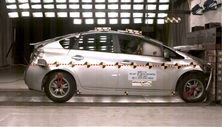
Frontal Crash Test
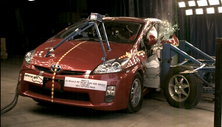
Side Crash Test
Overall Frontal Rating
Driver and Passenger Assessment
Driver Side
Passenger Side
Overall Side Rating
Side Barrier and Side Pole Tests
Driver Side
Passenger Side
Rollover Resistance
12.1% rollover risk in single-vehicle crash
Safety Features
ESC: StandardForward Collision Warning: NoLane Departure Warning: No
Recall Notices
NHTSANHTSA ID: 18V684000October 04, 2018
HYBRID PROPULSION SYSTEM
Toyota Motor Engineering & Manufacturing (Toyota) is recalling certain 2010-2014 Toyota Prius and 2012-2014 Toyota Prius V vehicles. Excessive voltage in the Intelligent Power Module (IPM) within the inverter may cause the hybrid system to shut down, causing the vehicle to stall while being driven.
Remedy Status
Toyota will notify owners, and dealers will update the software for the motor/generator control electronic control unit (ECU) and the hybrid control ECU as necessary, free of charge. The recall began January 22, 2019. Owners may contact Toyota customer service at 1-888-270-9371. Toyota's number for this recall is J0V. Note: The software updates in this recall are needed even if the vehicle had the software previously updated under recalls 14V-053 or 15V-449.
NHTSA ID: 16V487000June 30, 2016
AIR BAGS:SIDE/WINDOW
Toyota Motor Engineering & Manufacturing (Toyota) is recalling certain model year 2010-2012 Toyota Prius, 2010 and 2012 Toyota Prius Plug-in Hybrid, and 2011-2012 Lexus CT200h vehicles. A weld in the curtain shield air bag inflator may crack causing one or both portions of the inflator to eject into the passenger cabin.
Remedy Status
Toyota will notify owners, and dealers will install retention brackets to the curtain shield air bags, free of charge. The recall began on October 17, 2016. Owners may contact Toyota Customer Service Department at 1-800-331-4331. Toyota's number for this recall is Toyota G0U, and Lexus GLJ.
NHTSA ID: 16V396000June 02, 2016
SEATS:FRONT ASSEMBLY:SEAT HEATER/COOLER
Southeast Toyota Distributors, LLC (SET) is recalling certain 2005-2011 4Runner, Highlander, Sequoia, and Sienna, 2005-2010 Avalon and Tundra, 2006-2008 Camry Solara, 2006-2010 Highlander hybrid, 2006-2011 Rav4 and Tacoma, 2007-2010 FJ Cruiser, 2007-2011 Camry hybrid, 2009-2010 Venza, 2010-2012 Prius, 1988-1990 and 2005-2010 Camry, and 1989 and 2009-2010 Corolla vehicles equipped with aftermarket accessory seat heaters with a copper strand heating element. The electrical wiring in the seat heaters may be damaged when the seat cushion is compressed.
Remedy Status
SET will notify owners, and dealers will disconnect the seat heaters, free of charge, and refund the purchase price of the seat heater accessory. The recall began on July 14, 2016. Owners may contact SET customer service at 1-866-405-4226. SET number for this recall is SET16B.
NHTSA ID: 14V743000November 19, 2014
SEATS:FRONT ASSEMBLY:SEAT HEATER/COOLER
Southeast Toyota Distributors, LLC (SET) is recalling certain model year 2010-2011 Prius and Corolla, 2009-2011 Venza, 2006-2010 Avalon, 2007-2010 FJ Cruiser, 2005-2011 Sienna and Sequoia, 2006-2011 Tacoma 4x2 and 4x4, Camry, Highlander, Tundra 4x2 and 4x4, and 2007-2011 Rav4 and 4Runner. The affected vehicles may experience compression of the seat cushion which may damage the seat heater wiring.
Remedy Status
SET will notify owners, and dealers will disconnect the heaters with copper strand heating elements and refund the purchase price of the seat heater accessory, free of charge. The recall is expected to began in January 2015. Owners may contact SET customer service at 1-866-405-4226.
NHTSA ID: 14V053000February 12, 2014
HYBRID PROPULSION SYSTEM: INVERTER
Toyota is recalling certain model year 2010 through 2014 Prius vehicles. In the affected vehicles, the Intelligent Power Module (IPM) inside the inverter module (a component of the hybrid system) contains transistors that may become damaged from high operating temperatures. If this occurs, various warning lamps will be illuminated on the instrument panel and the vehicle will have reduced power allowing it to only drive a short distance.
Remedy Status
Toyota will notify owners and dealers will update the software for both the motor/generator control electronic control unit (ECU) and the hybrid control ECU, free of charge. If an owner experiences a failure of the inverter before the vehicle receives updated software, the dealer will repair or replace the inverter assembly with a new one at no charge. The recall began on March 21, 2014. Owners may contact Toyota at 1-800-331-4331.
NHTSA ID: 13V014000January 16, 2013
AIR BAGS:FRONTAL:SENSOR/CONTROL MODULE-INACTIVE
Southeast Toyota Distributors, LLC (SET) is recalling certain models interspersed through model years 2009 through 2013 as follows: model year 2009-2012 Tacoma, 4Runner, Camry, Camry Hybrid, Prius, and RAV4; model year 2009-2010 Avalon, FJ Cruiser, and Highlander Hybrid; model year 2010-2013 model year Corolla, Sienna and Tundra; model year 2009-2013 Highlander and Venza; model year 2012 Prius V; and model year 2010-2012 Sequoia. During modification by SET to include accessories such as leather seat covers, seat heaters or headrest DVD systems, these vehicles may not have had the passenger seat occupant sensing system calibration tested. Without passing the calibration test, the occupant sensing system may not operate as designed.
Remedy Status
Southeast Toyota will notify owners, and dealers will test the sensitivity of the occupant detection sensors, and recalibrate them as necessary. The recall began on March 21, 2013. Owners may contact Southeast Toyota at 1-800-301-6859.
Investigations
3 totalThe Office of Defects Investigation (ODI) has received a petition dated September 19, 2023 from the owner of a 2012 Toyota Prius V requesting that ODI reevaluate its decision to deny DP19-004. In the letter, the petitioner reported experiencing an unexpected and complete loss of brake power while driving, accompanied by multiple dashboard warning lights. This petition is based on the petitioner's direct experience and assessment that ODI closed DP19-004 because its prompting petition was withdrawn by that petitioner. ODI will review the work conducted during DP19-004 and a review of any additional related complaints and crashes via a new defect petition The petition and related materials can be reviewed at NHTSA.gov under the following ODI number:11553736.
Component: SERVICE BRAKES, HYDRAULIC:FOUNDATION COMPONENTSOpened: Nov 22, 2023
DPClosed
NHTSA received a petition on or about July 18, 2022, requesting that Federal Motor Vehicle Safety Standard (FMVSS) 141 be applied to all electric and hybrid vehicles operating in the United States. The petition can be reviewed at NHTSA.gov under ODI Number 11486072. FMVSS 141 establishes performance requirements for pedestrian alert sounds for motor vehicles. The standard applies to hybrid and electric vehicles that have a gross vehicle weight rating of 4,536 KG or less or are defined as low-speed vehicles. The standard became fully applicable to all such vehicles manufactured on or after March 1, 2021.On January 27, 2023, NHTSA opened Defect Petition (DP) 22-005 to evaluate the subject matter described in the petition. On June 24, 2023 and as supplemented on June 25, 2023, the petitioner notified NHTSA he was withdrawing his petition. The petitioner indicated that, based on his review of data, there is no justification for asserting potential benefits that could be derived from actions sought by my petition. Based on the petitioner's withdrawal, DP22-005 is closed. Closure of this DP does not represent a determination by NHTSA regarding the subject matter of the petition.
Component: ELECTRICAL SYSTEM:PROPULSION SYSTEMOpened: Jan 27, 2023Closed: Aug 7, 2023Related recall: 22V063000
DPClosed
On September 19, 2019, the Office of Defects Investigation (ODI) received a defect petition from Mr. Roger Hogan requesting that the Agency investigate and recall certain Toyota Prius, Prius PHV, Camry Hybrid and Avalon Hybrid vehicles for a brake actuator valve wear condition covered under Toyota Customer Support Programs ZJB and ZKK (subject CSP?s). In support of his request, the petitioner identified 117 NHTSA complaints allegedly related to the subject CSP condition, including 60 reporting crashes. On September 30, 2019, ODI opened Defect Petition DP19-004 to evaluate the petitioner?s request for an investigation. In August 2020, the petitioner notified the Agency that he was withdrawing his petition. Because the petitioner has withdrawn the petition, we are denying the petition as moot and no further analysis of this petition is necessary.NHTSA is authorized to issue an order requiring notification and remedy of a defect if the Agency?s investigation shows a defect in the design, construction, or performance of a motor vehicle that presents an unreasonable risk to safety. 49 U.S.C. ?? 30102(a)(9), 30118. Because the petitioner has with withdrawn the petition, the petition is denied as moot. This action does not constitute a finding by NHTSA that a safety-related defect does not exist. The Agency notes that it is not required to receive a defect petition prior to opening a defect investigation and will take further action if warranted by future circumstances.
Component: SERVICE BRAKES, HYDRAULIC:POWER ASSISTOpened: Sep 30, 2019Closed: Jan 21, 2021
Owner Complaints
511 totalSERVICE BRAKES
Apr 6, 2026
Brake Booster went out right at 160000 miles. ABS, emergency parking light, tire pressure light, and others I'm not sure if went on. Brakes felt very mushy and scary to drive.
SERVICE BRAKES
Mar 19, 2026
The brake cylinder assembly and the brake booster pump assembly failed while driving, which made braking very difficult, caused the regenerative braking to stop working, and caused multiple warning lights to come on. No warning lights, messages, or other symptoms were present pr...
Preview excerpt
SERVICE BRAKES
Jan 30, 2026
While driving, the Brake, ABS, traction light and other light lit up. The car lurched in an odd way. I can hear the oil pressure pump turn on every 5 seconds. Toyota shops told me the master cylinder and booster pump are failing and that the brakes will stop working while driving...
Preview excerpt
ELECTRICAL SYSTEM,ENGINE,FUEL/PROPULSION SYSTEM
Jan 12, 2026
I was driving my car at over 70 mph on a highway, no check engine, no issues, just had oil changed when check hybrid system alert came on with check engine light. I started to change lanes to get to shoulder when my car just died, completely. It died in the middle of the highway ...
Preview excerpt
SERVICE BRAKES
Dec 17, 2025
ABS, Slip Indicator and Brake warning lights have appeared on the cars dashboard. DTC fault code C1391 has appeared indicating a failure of the Brake Booster and Brake Booster Pump assemblies per Toyota Customer Support Bulletin (ZJB) No.: POL18-03. Loss of regenerative braking,...
Preview excerpt
SERVICE BRAKES
Nov 25, 2025
The Master Cylinder started failing while I was driving the car, the car only has 138k miles, the dashboard lit up like a Christmas tree, all the warning lights were on, and when I went to step on the brake, I had to push it all the way to the floor for any braking to happen. I r...
Preview excerpt
SERVICE BRAKES
Nov 7, 2025
The abs, brake, and traction control are intermittently on and off recently. I thought that there was a visible leak in the brake fluid. But my mechanic said that there was no feasible leaks found upon inspection. The car has also been inspected in Maryland without any issues. I ...
Preview excerpt
SERVICE BRAKES
Nov 4, 2025
VIN: [XXX] Year/Make/Model: 2011 Toyota Prius Mileage: 87,433 Date: 11/4/2025 DESCRIPTION Sudden 80% brake loss. Loss of ABS Brake Light + ABS + Traction Control lights on dash (photo attached). Known failed brake actuator (C1391) — identical to 500+ complaints in PE19-...
Preview excerpt
SERVICE BRAKES
Oct 1, 2025
ABS Brake pump booster and actuator broke and got me almost into an accident. It's a known issue and it's a safety issue because car can still run but the brake is less sensitive. Please get Toyota to honor the repair.
UNKNOWN OR OTHER,SERVICE BRAKES
Aug 18, 2025
Toyota issued a Customer Support Program ZJB for extended coverage of the brake booster and actuator assembly (this notice was not sent to the correct address the car was registered to with the dmv in 2019 so I never received the notice for this program) The Toyota program lengt...
Preview excerpt
Showing 10 recent complaints from 511 total
View Full Complaint LogCompare Related Vehicles
Why Compare These Pages
The strongest comparison flow is usually: exact vehicle-year page, then nearby years of the same model, then other 2011 Toyota models. That sequence helps separate one-off year spikes from broader make-wide patterns.
More Toyota Prius Years
2012 Toyota PriusCompare this year against 2011 for complaint and recall shifts.6r3i676c2010 Toyota PriusCompare this year against 2011 for complaint and recall shifts.10r4i2,817c2013 Toyota PriusCompare this year against 2011 for complaint and recall shifts.3r3i389c2009 Toyota PriusCompare this year against 2011 for complaint and recall shifts.6r2i500c2014 Toyota PriusCompare this year against 2011 for complaint and recall shifts.3r3i227c2008 Toyota PriusCompare this year against 2011 for complaint and recall shifts.4r2i1,496c
More 2011 Toyota Models
2011 Toyota CamryAnother 2011 Toyota option for same-year comparison.5r617c2011 Toyota SiennaAnother 2011 Toyota option for same-year comparison.14r1i609c2011 Toyota CorollaAnother 2011 Toyota option for same-year comparison.9r2i589c2011 Toyota RAV4Another 2011 Toyota option for same-year comparison.11r1i286c2011 Toyota HighlanderAnother 2011 Toyota option for same-year comparison.5r2i185c2011 Toyota TacomaAnother 2011 Toyota option for same-year comparison.9r180c
Frequently Asked Questions
How many recalls does the 2011 Toyota Prius have?
The 2011 Toyota Prius has 6 recalls recorded by NHTSA.
How many complaints have been filed for the 2011 Toyota Prius?
NHTSA has received 511 owner-reported complaints for the 2011 Toyota Prius.
What is the NHTSA safety rating for the 2011 Toyota Prius?
The 2011 Toyota Prius received an overall safety rating of 5 out of 5 stars from NHTSA.
What are the most common problems with the 2011 Toyota Prius?
The most commonly reported complaint categories for the 2011 Toyota Prius are service brakes (194 reports), exterior lighting (39 reports), air bags (33 reports).
Does the 2011 Toyota Prius have any recalls?
Yes. NHTSA has 6 recalls on record for the 2011 Toyota Prius. Scroll up to review the published recall summaries, consequences, and remedies. To check for unrepaired recalls on your specific vehicle, use your VIN at nhtsa.gov/recalls.
Check Another Vehicle
Look up recalls and complaints for any year, make, and model.
This page summarizes publicly available data from the National Highway Traffic Safety Administration (NHTSA). Complaint counts reflect reports submitted to NHTSA by vehicle owners and do not by themselves prove defect severity or vehicle safety. Safety ratings may not be available for all vehicle-years. This site is not affiliated with NHTSA or any vehicle manufacturer. For official information, visit the official NHTSA page for this vehicle.