Toyota · Tundra · 2020
2020 Toyota Tundra
5
Recalls
43
Complaints
4/5
Safety Rating
The 2020 Toyota Tundra has 5 recalls and 43 owner-reported complaints on file with NHTSA. Overall safety rating: 4 out of 5 stars. Most reported issue: unknown or other (7 reports).
Source: NHTSA Public Records · Updated Apr 29, 2026
Research Context
The 2020 Toyota Tundra page works best as a research starting point. Complaint totals show how much owner-reported activity exists, while recalls and investigations help show whether any of that activity turned into formal safety action.
Because this is a newer-era vehicle page, it usually helps to compare this year against nearby model years before deciding whether a complaint pattern looks isolated or persistent. On this page, the most prominent complaint area is unknown or other with 7 reported complaints.
Best Research Moves
- Use the complaint log to understand what owners were actually reporting instead of relying only on the raw complaint total.
- Compare the recall list with the complaint mix to see whether the most reported issues overlap with formal NHTSA safety campaigns.
- This page is primarily a complaints-and-recalls research surface, so compare nearby model years before treating the complaint total as a standalone verdict.
Key Takeaways
- The 2020 Toyota Tundra currently shows 5 NHTSA recalls listed on this page and 43 owner-reported complaints.
- This page currently shows no linked NHTSA investigations.
- This page reflects complaint volume, recall history, and NHTSA test data, but it does not diagnose causes or rank reliability by itself.
- Safety data currently shows 4/5 overall NHTSA safety rating.
- The most frequently reported complaint categories on this page are unknown or other (7), fuel/propulsion system (5), engine (4).
- Vehicle
- 2020 Toyota Tundra
- Recalls
- 5
- Complaints
- 43
- Safety Rating
- 4/5
How to Interpret This Page
This page combines three types of NHTSA data: recall campaigns (official manufacturer or government actions), owner complaints (unverified consumer reports), and crash test ratings (where available). A vehicle with many complaints is not necessarily less reliable — complaint volume correlates with sales volume and vehicle age. Recalls indicate identified defects, not overall quality. To compare this model year with others, use the year navigation in the sidebar or return to the model overview page.
If you are researching a used vehicle, start with the complaint categories, compare them against the recall list, and then check nearby model years to see whether the same issue profile repeats. That usually produces a better buying or research signal than treating the raw complaint total as a standalone safety ranking.
NHTSA Crash Test Performance
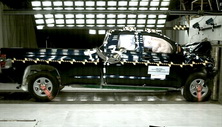
Frontal Crash Test
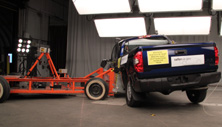
Side Crash Test
Overall Frontal Rating
Driver and Passenger Assessment
Driver Side
Passenger Side
Overall Side Rating
Side Barrier and Side Pole Tests
Driver Side
Passenger Side
Rollover Resistance
19.8% rollover risk in single-vehicle crash
Safety Features
ESC: StandardForward Collision Warning: StandardLane Departure Warning: Standard
Recall Notices
NHTSANHTSA ID: 21E103000December 23, 2021
STEERING:HYDRAULIC POWER ASSIST SYSTEM
Toyota Motor Engineering & Manufacturing (Toyota) is recalling certain JTEKT power steering gear assembly service parts for 2007-2021 Tundra and 2008-2022 Sequoia, part numbers 44250-0C160, 44250-0C131, 44250-0C170, and 11250-0C121. The power steering gear assembly may have been manufactured incorrectly, which can result in an oil leak.
Remedy Status
Dealers will inspect and replace the power steering gear assembly, free of charge. Owner notification letters were mailed on February 17, 2022. Owners may contact Toyota customer service at 1-800-331-4331. Toyota's number for this recall is 21TH01.
NHTSA ID: 21V920000November 23, 2021
STEERING:HYDRAULIC POWER ASSIST SYSTEM
Toyota Motor Engineering & Manufacturing (Toyota) is recalling certain 2008-2022 Sequoia and 2007-2021 Tundra vehicles. The power steering gear assembly may have been manufactured incorrectly, which can result in an oil leak.
Remedy Status
Dealers will inspect and replace the power steering gear assembly as necessary, free of charge. Owner notification letters were mailed on January 21, 2022. Owners may contact Toyota customer service at 1-800-331-4331. Toyota's numbers for this recall are 21TB10 and 21TA10.
NHTSA ID: 21V688000September 02, 2021
EXTERIOR LIGHTING:HEADLIGHTS
Toyota Motor Engineering & Manufacturing (Toyota) is recalling certain 2018-2021 Tundra vehicles. The headlight electrical circuits may power the high and low beams simultaneously, which could overheat the electrical connector.
Remedy Status
Dealers will modify the engine wire harness assembly and replace any damaged bulb, bulb connector, and/or headlight assembly as necessary, free of charge. Owner notification letters were mailed April 25, 2022. Owners may contact Toyota customer service at 1-800-331-4331. Toyota's numbers for this recall are 21TB06 and 21TA06.
NHTSA ID: 20V682000November 04, 2020
FUEL SYSTEM, GASOLINE:DELIVERY:FUEL PUMP
Toyota Motor Engineering & Manufacturing (Toyota) is recalling certain 2018-2019 4Runner, 2019-2020 Avalon, 2019 Corolla Hatchback, 2017-2019 Highlander, 2018-2020 Camry, 2020 Corolla, 2018-2019 Land Cruiser, 2017-2020 Tacoma, 2019-2020 RAV4, 2019-2020 Sequoia, 2017-2020 Sienna, 2019-2020 Tundra, 2018-2020 Lexus ES350, 2017 Lexus GS200t, 2017-2019 Lexus GS350, 2019 Lexus GS300, 2018-2020 Lexus LC500h, 2019-2020 Lexus LS500, 2018-2019 Lexus GX460, 2017 Lexus IS200t, 2019 Lexus IS300, 2019 Lexus IS350, 2018-2020 Lexus LC500, 2018 Lexus LS500, 2019 Lexus LS500h, 2018-2019 Lexus LX570, 2017 Lexus RC200t, 2019 Lexus RC300, RC350, 2017 and 2019-2020 Lexus RX350, 2018-2020 RX350L, 2019 Lexus UX200, 2018-2019 Lexus NX300 vehicles. The low-pressure fuel pump inside the fuel tank may fail.
Remedy Status
Toyota will notify owners, and dealers will replace the fuel pump assembly with an improved one, free of charge. Owners of specific models were notified that remedy parts were available starting January 21, 2021. Owners of other models will be notified as remedy parts become available. Remedy parts should be available for all affected vehicles by late March 2021. Owners may contact Toyota customer service at 1-888-270-9371 or Lexus customer service at 1-800-255-3987. Note: This recall is an expansion of recall 20V-012. Toyota's number for this recall is 20TA02. Lexus' number for this recall is 20LA01.
NHTSA ID: 20V410000July 15, 2020
EXTERIOR LIGHTING:TURN SIGNAL
Toyota Motor Engineering & Manufacturing (Toyota) is recalling certain 2018-2020 Toyota Tundra vehicles equipped with LED headlight assemblies. Due to a wiring error, the front turn signals may not flash brightly enough. As such, these vehicles fail to comply with the requirements of Federal Motor Vehicle Safety Standard (FMVSS) number 108, "Lamps, Reflective Devices, and Associated Equipment."
Remedy Status
Toyota will notify owners, and dealers will modify the wire harness connected to the front turn signal bulbs free of charge. The recall began August 17, 2020. Owners may contact Toyota customer service at 1-800-270-9371. Toyota's number for this recall is 20TB12/20TA12.
Owner Complaints
43 totalUNKNOWN OR OTHER
Mar 9, 2026
In a 2020 Toyota Tundra, 1794 Edition (60k miles), traveling at normal highway speed, the moonroof glass panel spontaneously exploded. There was no previous damage or modification to the moonroof panel. Panel explosion was extremely loud and surprising. Large pieces of glass were...
Preview excerpt
SEATS
FIREJan 6, 2026
The contact owns a 2020 Toyota Tundra. The contact stated that while the vehicle was parked, the contact discovered that there was smoke inside the vehicle. The contact opened the front passenger side door and discovered that the front passenger seat was burned and had melted. Th...
Preview excerpt
STRUCTURE
Oct 1, 2025
IN BACK CEILING LEAKING WORSE NOW...
VISIBILITY
Sep 15, 2025
The contact owns a 2020 Toyota Tundra. The contact stated that while opening the sunroof, the sunroof made an abnormal chainsaw sound. The message "Window Open" was displayed. The contact stated that the sunroof was opening and closing independently. The vehicle was taken to the ...
Preview excerpt
STRUCTURE
Jun 1, 2025
BODY TOP CELING IS LEAKING.. TOYOTA TRY TO COST ME OVER ONE THOUSAND I CANT AFFORD.. I SEE LOT OF COMMON RECALL FROM OLD TUNDRA HAVE SAME PROBLEM. I THINK TOYOTA IS RESPONBILE TO FIX...
UNKNOWN OR OTHER
May 23, 2025
It happend today .. I notice while I Cleaned .....back seat ceiling leaking . it seem come from third brake light it no recall on list..
FORWARD COLLISION AVOIDANCE
Apr 27, 2025
The contact owns a 2020 Toyota Tundra. The contact stated that on several occasions while driving at various speeds, the "Pre-Collision System Failure” warning light and icon were illuminated. Additionally, the message "See Dealer" was displayed. The contact also stated that the ...
Preview excerpt
UNKNOWN OR OTHER
Dec 28, 2024
Spontaneous explosion of sunroof, under normal driving status, pictures were taken, the toyota deealer has replaced and repaired at my cost, I have filed an insurance claim with USAA and uploaded bill and pictures, The shattered glass could have entered the cab but did not. No w...
Preview excerpt
STRUCTURE
Sep 14, 2024
The sunroof shattered while driving down the freeway. No vehicles near or overpasses near. The shade was closed so the glass fell on it not on my head or passengers that could have been present. Sounded like a loud pop. Then I heard wind noise. The glass is blown upward, not down...
Preview excerpt
FUEL SYSTEM, GASOLINE
Mar 3, 2024
The contact owns a 2020 Toyota Tundra. The contact stated while driving at an undisclosed speed, the vehicle inadvertently lost motive power. The contact was able to pull to the shoulder of the roadway, where the vehicle failed to restart. The check engine and traction control wa...
Preview excerpt
Showing 10 recent complaints from 43 total
View Full Complaint LogCompare Related Vehicles
Why Compare These Pages
The strongest comparison flow is usually: exact vehicle-year page, then nearby years of the same model, then other 2020 Toyota models. That sequence helps separate one-off year spikes from broader make-wide patterns.
More Toyota Tundra Years
2021 Toyota TundraCompare this year against 2020 for complaint and recall shifts.3r23c2019 Toyota TundraCompare this year against 2020 for complaint and recall shifts.10r71c2022 Toyota TundraCompare this year against 2020 for complaint and recall shifts.13r396c2018 Toyota TundraCompare this year against 2020 for complaint and recall shifts.9r96c2023 Toyota TundraCompare this year against 2020 for complaint and recall shifts.13r342c2017 Toyota TundraCompare this year against 2020 for complaint and recall shifts.6r1i76c
More 2020 Toyota Models
2020 Toyota RAV4Another 2020 Toyota option for same-year comparison.6r611c2020 Toyota CorollaAnother 2020 Toyota option for same-year comparison.3r296c2020 Toyota HighlanderAnother 2020 Toyota option for same-year comparison.4r271c2020 Toyota CamryAnother 2020 Toyota option for same-year comparison.3r256c2020 Toyota TacomaAnother 2020 Toyota option for same-year comparison.1r84c2020 Toyota C-HRAnother 2020 Toyota option for same-year comparison.1r44c
Frequently Asked Questions
How many recalls does the 2020 Toyota Tundra have?
The 2020 Toyota Tundra has 5 recalls recorded by NHTSA.
How many complaints have been filed for the 2020 Toyota Tundra?
NHTSA has received 43 owner-reported complaints for the 2020 Toyota Tundra.
What is the NHTSA safety rating for the 2020 Toyota Tundra?
The 2020 Toyota Tundra received an overall safety rating of 4 out of 5 stars from NHTSA.
What are the most common problems with the 2020 Toyota Tundra?
The most commonly reported complaint categories for the 2020 Toyota Tundra are unknown or other (7 reports), fuel/propulsion system (5 reports), engine (4 reports).
Does the 2020 Toyota Tundra have any recalls?
Yes. NHTSA has 5 recalls on record for the 2020 Toyota Tundra. Scroll up to review the published recall summaries, consequences, and remedies. To check for unrepaired recalls on your specific vehicle, use your VIN at nhtsa.gov/recalls.
Check Another Vehicle
Look up recalls and complaints for any year, make, and model.
This page summarizes publicly available data from the National Highway Traffic Safety Administration (NHTSA). Complaint counts reflect reports submitted to NHTSA by vehicle owners and do not by themselves prove defect severity or vehicle safety. Safety ratings may not be available for all vehicle-years. This site is not affiliated with NHTSA or any vehicle manufacturer. For official information, visit the official NHTSA page for this vehicle.