Toyota · Prius · 2019
2019 Toyota Prius
3
Recalls
28
Complaints
5/5
Safety Rating
The 2019 Toyota Prius has 3 recalls and 28 owner-reported complaints on file with NHTSA. Overall safety rating: 5 out of 5 stars. Most reported issue: unknown or other (5 reports).
Source: NHTSA Public Records · Updated Apr 29, 2026
Research Context
The 2019 Toyota Prius page works best as a research starting point. Complaint totals show how much owner-reported activity exists, while recalls and investigations help show whether any of that activity turned into formal safety action.
Because this is a newer-era vehicle page, it usually helps to compare this year against nearby model years before deciding whether a complaint pattern looks isolated or persistent. On this page, the most prominent complaint area is unknown or other with 5 reported complaints.
Best Research Moves
- Use the complaint log to understand what owners were actually reporting instead of relying only on the raw complaint total.
- Review the recall section even if the total is smaller, because a limited number of recalls can still point to meaningful safety actions.
- Check the linked investigations for extra ODI context if you want to see whether owner complaints escalated into formal defect review.
Key Takeaways
- The 2019 Toyota Prius currently shows 3 NHTSA recalls listed on this page and 28 owner-reported complaints.
- This page currently shows 1 NHTSA investigation linked to this page.
- This page reflects complaint volume, recall history, and NHTSA test data, but it does not diagnose causes or rank reliability by itself.
- Safety data currently shows 5/5 overall NHTSA safety rating.
- The most frequently reported complaint categories on this page are unknown or other (5), tires (2), service brakes (2).
- Vehicle
- 2019 Toyota Prius
- Recalls
- 3
- Complaints
- 28
- Safety Rating
- 5/5
How to Interpret This Page
This page combines three types of NHTSA data: recall campaigns (official manufacturer or government actions), owner complaints (unverified consumer reports), and crash test ratings (where available). A vehicle with many complaints is not necessarily less reliable — complaint volume correlates with sales volume and vehicle age. Recalls indicate identified defects, not overall quality. To compare this model year with others, use the year navigation in the sidebar or return to the model overview page.
If you are researching a used vehicle, start with the complaint categories, compare them against the recall list, and then check nearby model years to see whether the same issue profile repeats. That usually produces a better buying or research signal than treating the raw complaint total as a standalone safety ranking.
NHTSA Crash Test Performance
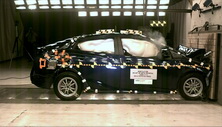
Frontal Crash Test
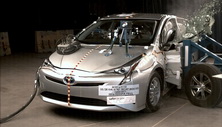
Side Crash Test
Overall Frontal Rating
Driver and Passenger Assessment
Driver Side
Passenger Side
Overall Side Rating
Side Barrier and Side Pole Tests
Driver Side
Passenger Side
Rollover Resistance
10.7% rollover risk in single-vehicle crash
Safety Features
ESC: StandardForward Collision Warning: StandardLane Departure Warning: Standard
Recall Notices
NHTSANHTSA ID: 19V876000December 11, 2019
ELECTRICAL SYSTEM: INSTRUMENT CLUSTER/PANEL
Toyota Motor Engineering & Manufacturing (Toyota) is recalling certain 2019 Prius vehicles. An electrical short circuit in the combination meter could occur, causing the speedometer, the odometer, and the fuel gauge to go blank. As such, these vehicles fail to comply with the requirements of Federal Motor Vehicle Safety Standard (FMVSS) number 101, "Controls and Displays."
Remedy Status
Toyota will notify owners, and dealers will inspect the flash memory chip (ROM) production date, and if necessary, replace it along with the combination meter circuit board, free of charge. The recall began February 7, 2020. Owners may contact Toyota customer service at 1-888-270-9371. Toyota's numbers for this recall are 19TA21 and 19TB21.
NHTSA ID: 19V544000July 24, 2019
ELECTRONIC STABILITY CONTROL (ESC)
Toyota Motor Engineering & Manufacturing (Toyota) is recalling certain 2019 Lexus LS500, LC500, ES300h, UX250h, LS500h, Toyota Prius, RAV4 HV, 2019-2020 Toyota Prius Prime, and 2020 Corolla HV vehicles. The brake booster pump may fail causing a deactivation of the Vehicle Stability Control system and a loss of braking assist. As such, these vehicles fail to comply with the requirements of Federal Motor Vehicle Safety Standard (FMVSS) number 126, "Electronic Stability Control Systems."
Remedy Status
Toyota will notify owners, and dealers will inspect and, if necessary, replace the brake booster pump, free of charge. The recall began September 20, 2019. Toyota owners may contact Toyota customer service at 1-888-270-9371 and Lexus owners may contact Lexus customer service at 1-800-255-3987. Toyota's numbers for this recall are K1L/K0L. Lexus' numbers for this recall are K2F/KLF.
NHTSA ID: 19V244000March 27, 2019
EQUIPMENT:OTHER:LABELS
Gulf States Toyota (GST) is recalling certain 2019 C-HR, 4Runner, Avalon, Avalon Hybrid, Camry, Camry Hybrid, Highlander, Land Cruiser, Prius, RAV4, Sequoia, Tacoma, Sienna, Tundra and Yaris vehicles. The text on the load capacity label may become illegible. As such, these vehicles fail to comply with the requirements of Federal Motor Vehicle Safety Standard (FMVSS) number 110, "Tire Selection and Rims."
Remedy Status
GST will notify owners, and dealers will provide corrected load carrying capacity modification labels, free of charge. The recall began May 24, 2019. Owners may contact GST customer service at 1-800-444-1074. GST's number for this recall is 19R1.
Investigations
1 totalDPClosed
NHTSA received a petition on or about July 18, 2022, requesting that Federal Motor Vehicle Safety Standard (FMVSS) 141 be applied to all electric and hybrid vehicles operating in the United States. The petition can be reviewed at NHTSA.gov under ODI Number 11486072. FMVSS 141 establishes performance requirements for pedestrian alert sounds for motor vehicles. The standard applies to hybrid and electric vehicles that have a gross vehicle weight rating of 4,536 KG or less or are defined as low-speed vehicles. The standard became fully applicable to all such vehicles manufactured on or after March 1, 2021.On January 27, 2023, NHTSA opened Defect Petition (DP) 22-005 to evaluate the subject matter described in the petition. On June 24, 2023 and as supplemented on June 25, 2023, the petitioner notified NHTSA he was withdrawing his petition. The petitioner indicated that, based on his review of data, there is no justification for asserting potential benefits that could be derived from actions sought by my petition. Based on the petitioner's withdrawal, DP22-005 is closed. Closure of this DP does not represent a determination by NHTSA regarding the subject matter of the petition.
Component: ELECTRICAL SYSTEM:PROPULSION SYSTEMOpened: Jan 27, 2023Closed: Aug 7, 2023Related recall: 22V063000
Owner Complaints
28 totalSERVICE BRAKES
Oct 28, 2025
See Attachment
UNKNOWN OR OTHER
Jul 3, 2025
Coolant system failed because coolant was leaking into catalytic converter. Two mechanics in two different states (one a Toyota dealer) claimed this is defect with 2019 Prius and results in repair costing more than $2000.00 because of this design flaw. Warning light did not come ...
Preview excerpt
ENGINE AND ENGINE COOLING
May 27, 2025
The contact owns a 2019 Toyota Prius. The contact stated there was a coolant leak and the coolant level was low. There was no indication of coolant on the ground. The check engine and engine HOT warning lights were illuminated. The contact stated that the failure was related to T...
Preview excerpt
POWER TRAIN,ENGINE,FUEL/PROPULSION SYSTEM
May 22, 2025
Exhaust heat-exchanger coolant pipe (part of the hybrid cooling loop) on my 2019 Toyota Prius is the system that failed. Safety risk: complete loss of coolant can cause sudden engine overheating and possible power reduction or shutdown while the vehicle is moving. I transport two...
Preview excerpt
SEAT BELTS
Oct 1, 2024
The issue is with the back middle seat belt. When the back right passenger seat, which is a 2/3 seat is placed down in order to accommodate long pieces of lumber, it remains stuck there as the seatbelt for the middle seat will not release. The seatbelt mechanism for the middle se...
Preview excerpt
VEHICLE SPEED CONTROL,SERVICE BRAKES
CRASHJul 31, 2024
* I was pulling into a parking space at a slow speed. When I applied the brake the car accelerated causing the car to scrape the car next to the space. The car then stopped. * The acceleration was out of my control and the brakes did not stop it. Fortunately there was no person ...
Preview excerpt
UNKNOWN OR OTHER
May 1, 2024
Body of car has rust perforation starting from the inside working out. This is on the roof, so water incursion will effect airbags and electrical system. FIrst noticed rust bubbles a few years ago, but did not think much of it. Now two body shops have said roof panel needs to be ...
Preview excerpt
ELECTRICAL SYSTEM,SERVICE BRAKES,FORWARD COLLISION AVOIDANCE
CRASHApr 8, 2024
I was idling at a parking space and went to turn off my car. The vehicle surged forward and the BRAKE sign came on. I pushed my brake to the floor and nothing happened. I was moving toward a brick wall so I put in in reverse and the car surged backwards. The BRAKE sign came on a...
Preview excerpt
ELECTRICAL SYSTEM,SERVICE BRAKES,ENGINE
CRASHFeb 17, 2024
On Saturday [XXX], while shifting to reverse in a back alley to back up slowly, the car engine suddenly and loudly revved and shot backwards at accelerating speed. I slammed on brakes which did not respond at all, thus forcing me to attempt to shift gears which also failed to s...
Preview excerpt
AIR BAGS
CRASH1 injuryNov 11, 2023
Vehicle was involved in a accident and it was a total loss and no airbags deployed There wasBodily injury due to this accident
Showing 10 recent complaints from 28 total
View Full Complaint LogCompare Related Vehicles
Why Compare These Pages
The strongest comparison flow is usually: exact vehicle-year page, then nearby years of the same model, then other 2019 Toyota models. That sequence helps separate one-off year spikes from broader make-wide patterns.
More Toyota Prius Years
2020 Toyota PriusCompare this year against 2019 for complaint and recall shifts.1i14c2018 Toyota PriusCompare this year against 2019 for complaint and recall shifts.1r1i34c2021 Toyota PriusCompare this year against 2019 for complaint and recall shifts.1i6c2017 Toyota PriusCompare this year against 2019 for complaint and recall shifts.3r1i100c2022 Toyota PriusCompare this year against 2019 for complaint and recall shifts.1r1i22c2016 Toyota PriusCompare this year against 2019 for complaint and recall shifts.5r1i177c
More 2019 Toyota Models
2019 Toyota RAV4Another 2019 Toyota option for same-year comparison.7r855c2019 Toyota HighlanderAnother 2019 Toyota option for same-year comparison.3r441c2019 Toyota CamryAnother 2019 Toyota option for same-year comparison.6r365c2019 Toyota TacomaAnother 2019 Toyota option for same-year comparison.4r1i206c2019 Toyota CorollaAnother 2019 Toyota option for same-year comparison.5r1i198c2019 Toyota C-HRAnother 2019 Toyota option for same-year comparison.3r85c
Frequently Asked Questions
How many recalls does the 2019 Toyota Prius have?
The 2019 Toyota Prius has 3 recalls recorded by NHTSA.
How many complaints have been filed for the 2019 Toyota Prius?
NHTSA has received 28 owner-reported complaints for the 2019 Toyota Prius.
What is the NHTSA safety rating for the 2019 Toyota Prius?
The 2019 Toyota Prius received an overall safety rating of 5 out of 5 stars from NHTSA.
What are the most common problems with the 2019 Toyota Prius?
The most commonly reported complaint categories for the 2019 Toyota Prius are unknown or other (5 reports), tires (2 reports), service brakes (2 reports).
Does the 2019 Toyota Prius have any recalls?
Yes. NHTSA has 3 recalls on record for the 2019 Toyota Prius. Scroll up to review the published recall summaries, consequences, and remedies. To check for unrepaired recalls on your specific vehicle, use your VIN at nhtsa.gov/recalls.
Check Another Vehicle
Look up recalls and complaints for any year, make, and model.
This page summarizes publicly available data from the National Highway Traffic Safety Administration (NHTSA). Complaint counts reflect reports submitted to NHTSA by vehicle owners and do not by themselves prove defect severity or vehicle safety. Safety ratings may not be available for all vehicle-years. This site is not affiliated with NHTSA or any vehicle manufacturer. For official information, visit the official NHTSA page for this vehicle.